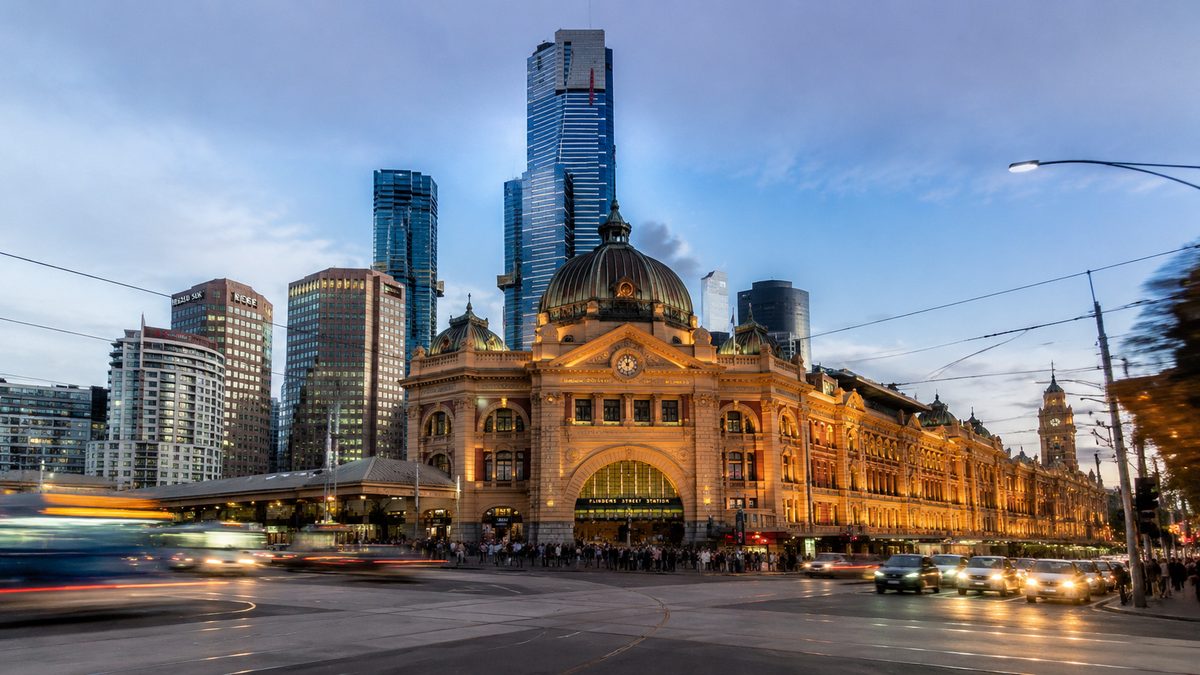
Melbourne is one of those cities that rewards curiosity. The more you look, the more you find. Here are the facts that actually surprised me — and the ones that change how you see the city.
Did Melbourne Ever Serve as Australia's Capital City?
Yes. And for longer than most people realise.
When Australia federated in 1901, Sydney and Melbourne could not agree on which city should be the capital. The compromise was to build a brand new city — Canberra — roughly halfway between them. Until Canberra was ready, Melbourne served as the temporary national capital from 1901 to 1927.
Parliament sat in Melbourne for 26 years. The old Parliament House on Spring Street hosted the federal government the entire time. That building still stands and is open to visitors today.
So when people debate Sydney versus Melbourne, there is a factual answer to at least one part of it. Melbourne ran the country first.
What Is Melbourne Known For?
A few things stand out above everything else.
- Coffee culture that shaped how Australia drinks espresso
- Street art laneways that became internationally recognised
- Australian rules football, which was codified here in 1859
- A tram network that is the largest outside Europe
- Weather that changes four times in a single day
What I find interesting is that most of these things were not planned. They grew from the bottom up. The laneways were service alleys. The coffee culture came from post-war Italian and Greek immigration. The tram network expanded because the city kept growing outward. Melbourne did not design itself to be interesting. It just accumulated things over time.
What Is a Surprising Fact About Melbourne's Population?
Melbourne is one of the most ethnically diverse cities on earth. Over 140 languages are spoken there. More than a third of residents were born overseas.
The wave that changed everything came after World War Two. Australia ran a large-scale immigration program starting in the late 1940s, pulling in people from Italy, Greece, Malta, and later from Vietnam, China, Lebanon, and India. Melbourne absorbed more of that migration than any other Australian city relative to its existing size at the time.
By the 1960s, Melbourne had the third-largest Greek-speaking population of any city in the world, behind Athens and Thessaloniki. That is not a minor footnote. That is a demographic fact that reshaped the food, the culture, and the social fabric of the entire city.
In my experience reading through the historical records, what stands out is how fast it happened. In 1945 Melbourne was a fairly Anglo city. By 1975 it was genuinely multicultural. Thirty years. That is an unusually fast transformation for a city of that size.
Why Is Melbourne Called the Coffee Capital of Australia?
Because it earned it, and the history behind it is specific.
When Italian and Greek immigrants arrived in Melbourne in the 1950s and 1960s, they brought espresso culture with them. The first espresso machine in Australia was installed in Melbourne in 1953 at a cafe in the CBD. By the 1960s, espresso bars were common in Carlton, Fitzroy, and the inner suburbs.
Sydney had coffee too, but Melbourne's immigrant communities were more concentrated and more committed to the ritual of it. Sitting at a cafe, drinking a proper short black, talking for an hour — that became part of daily life in a way it did not in Sydney.
What I found when looking at this is that Melbourne's coffee identity is not marketing. It predates any tourism campaign by decades. The flat white, which is now sold at Starbucks globally, has contested origins but Melbourne baristas were making versions of it in the 1980s before anyone called it that.
Today Melbourne has more independent cafes per capita than almost any comparable city. The specialty coffee movement that spread through London, New York, and Tokyo in the 2010s drew heavily on techniques and standards that Melbourne roasters had been using since the 1990s.
What Are Some Unusual Facts About Melbourne's Laneways?
The laneways were not built to be charming. They were service lanes — for deliveries, rubbish collection, and access to the backs of buildings. The grid that Robert Hoddle surveyed in 1837 included them as functional infrastructure, not as a feature.
What happened over the next 150 years is that the laneways became neglected, then dangerous, then interesting. In the 1990s the City of Melbourne made a deliberate decision to activate them. They brought in small bars, cafes, and artists. They commissioned street art. They put in lighting.
Hosier Lane became the most photographed laneway in Australia. AC/DC Lane was named after the band in 2004. Degraves Street became a cafe strip that draws visitors from overseas specifically to sit in it.
Here are some specific facts about the laneways that most people do not know.
- There are over 50 laneways in the Melbourne CBD grid alone
- Some laneways have official names that almost no one uses — locals navigate by landmarks instead
- The street art in Hosier Lane is not permanent — it gets painted over and repainted constantly, so what you see today will not exist in six months
- Several laneways contain buildings that predate Federation, making them some of the oldest surviving commercial structures in Victoria
- The laneway bar scene that Melbourne is famous for grew directly from a 2002 liquor licensing reform that made small venue licences easier to obtain
What I find genuinely interesting here is the planning decision. Most cities would have demolished the laneways or turned them into car parks. Melbourne kept them and then figured out what to do with them later. That sequence — preserve first, activate second — produced something that cannot be replicated from scratch.
What World Records or Firsts Is Melbourne Famous For?
Several, and some of them are genuinely strange.
First feature film ever made. The Story of the Kelly Gang, filmed in Melbourne in 1906, is recognised by the National Film and Sound Archive and multiple film historians as the world's first feature-length narrative film. It ran for over an hour. This predates Hollywood as an industry.
First Australian rules football match. Played in Melbourne in 1858 between Melbourne Grammar and Scotch College. The rules were written the following year in 1859, making Australian rules football the oldest codified football code in the world with a continuous governing body.
Largest tram network outside Europe. Melbourne's tram network covers 250 kilometres of track and carries around 200 million passengers per year. The iconic W-class trams, the old yellow ones, have been running since the 1930s and some are still in service.
The Melbourne Cup. First run in 1861, it is the oldest continuously run major thoroughbred horse race in the world. The fact that it is held on a Tuesday and the entire country stops for three minutes is a social phenomenon that has no real equivalent anywhere else.
Some fun facts about Melbourne that are less well known include the fact that Melbourne hosted the 1956 Olympic Games, the first Olympics held in the Southern Hemisphere. The city built the Melbourne Cricket Ground to its current scale specifically for those games. The MCG now holds 100,024 people and is the largest stadium in Australia and the tenth largest in the world.
What Else Is Worth Knowing?
A few more facts that come up less often.
The Hoddle Grid is unusually wide. Robert Hoddle surveyed Melbourne's CBD streets in 1837 and made them 99 feet wide — wider than most European city streets of the era. He was criticised for it at the time. Those wide streets are now one of the reasons Melbourne's CBD functions as well as it does with trams, cars, cyclists, and pedestrians all sharing the same space.
Melbourne has a river that flows the wrong way. The Yarra River appears to flow backwards relative to what you would expect from the topography. Early European settlers noted this. The river actually flows from the Yarra Ranges in the east down to Port Phillip Bay in the west, which is geographically normal, but the way it curves through the city creates the impression of reverse flow. The Wurundjeri people called it Birrarung, meaning river of mist.
The Royal Arcade is the oldest shopping arcade in Australia. Built in 1869, it still operates as a retail arcade today. Gog and Magog, the two giant figures that strike the hour on the clock inside, have been doing that since the arcade opened.
Melbourne's public library opened in 1856. The State Library of Victoria is one of the oldest public libraries in the world. The domed reading room, built in 1913, has a dome that was the largest concrete dome on earth when it was completed. It held that record for several years.
Frequently Asked Questions
What is the most surprising fact about Melbourne?
For most people it is the capital city fact. Melbourne governed Australia for 26 years and most Australians do not know this.
Is Melbourne really the coffee capital of Australia?
Yes. The espresso culture that defines Australian coffee nationally started in Melbourne in the 1950s, driven by Italian and Greek immigration. Sydney has good coffee now, but Melbourne built the culture first.
How old is Melbourne?
European settlement began in 1835 when John Batman arrived from Van Diemen's Land (now Tasmania). The city was officially named Melbourne in 1837 and incorporated as a city in 1847. The Wurundjeri people lived in the area for at least 40,000 years before that.
Why are Melbourne's laneways famous?
They were functional service alleys that the city activated through planning reform and arts investment in the 1990s and 2000s. The result was a dense network of small bars, cafes, and street art that became a model other cities tried to copy.
What sport did Melbourne invent?
Australian rules football. The rules were written in Melbourne in 1859, making it the oldest codified football code with a continuous governing body in the world.
Did Melbourne host the Olympics?
Yes. The 1956 Summer Olympics were held in Melbourne, the first Olympics in the Southern Hemisphere. The equestrian events were held in Stockholm due to Australian quarantine laws — the only time in Olympic history that events from a single Games were held on two different continents.