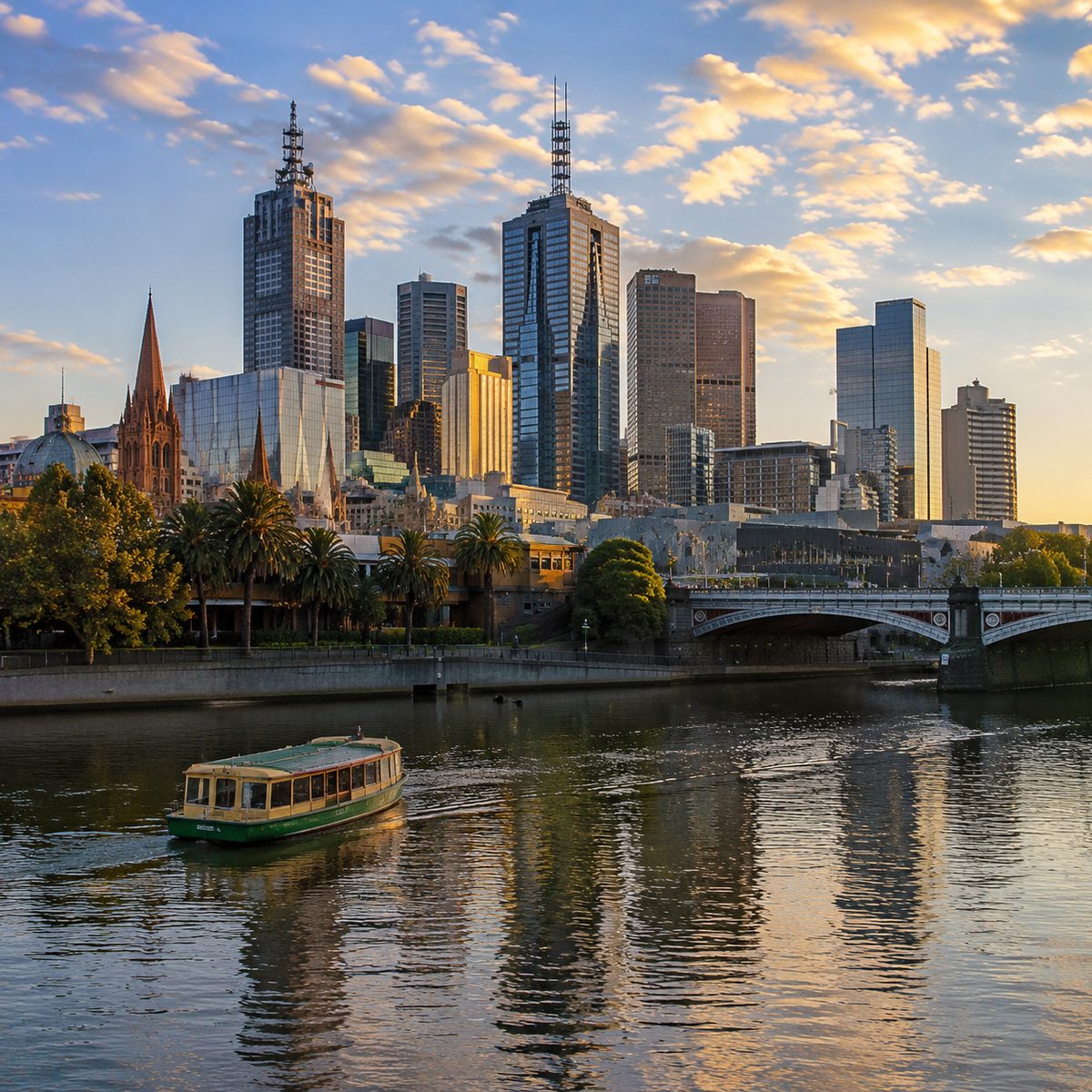
Melbourne doesn't reveal itself all at once. It rewards the curious — the person who turns down a laneway on a hunch, who boards a tram without a fixed destination, who lingers over a long lunch in a suburb they'd never heard of a week ago. Four days is enough time to get under the city's skin, provided you stop trying to tick off a checklist and start thinking like a local.
This city was built in layers. The gold rush of the 1850s gave it grand civic ambition. Waves of post-war migration gave it its food culture. Decades of deindustrialisation gave it its creative edge. What you experience walking through Fitzroy or the CBD or Footscray is the physical residue of all those forces pressing against each other. That's what makes Melbourne genuinely interesting — and that's what a well-structured four days can help you feel.
Is 4 Days Enough Time to See Melbourne?
Four days is enough to understand Melbourne. It is not enough to exhaust it — nothing is. But four focused days, moving through distinct neighbourhoods rather than bouncing between isolated attractions, will give you a real sense of how this city works and why people who live here tend to stay.
The key is resisting the urge to spread too thin. Melbourne's inner suburbs each have their own character, their own food scene, their own history. Trying to hit all of them in four days produces a blur. Choosing five or six and going deep produces a city you'll actually remember.
Getting Around: The Case for Public Transport
Before the itinerary, the method. Melbourne's public transport network — trams, trains, and buses operating under the Metlink Melbourne system — is the single best way to move through this city as a visitor. Not because it's perfect, but because it puts you on the street, at ground level, moving through neighbourhoods rather than under them or above them.
The tram network in particular is central to the Melbourne experience. The City Circle tram runs free through the CBD. Beyond that, a Myki card — loaded with credit and tapped on and off at every journey — covers the entire network. A daily cap means you won't overpay no matter how many trips you take. Pick up a Myki at the airport, at 7-Eleven stores, or at major train stations.
Trains connect the inner suburbs to the CBD quickly. Trams handle the cross-suburb movement. Buses fill the gaps. For four days of serious neighbourhood exploration, you won't need a car — and in many areas, a car would actively slow you down.
Day 1: The CBD and Its Laneways
Morning: The Grid and What's Hidden Inside It
Melbourne's central city was surveyed in 1837 on a strict grid — wide boulevards intersected by narrow service lanes. Those lanes were originally for deliveries and waste collection. Over the past three decades they've become the most distinctive feature of the city centre: Hosier Lane, Degraves Street, Centre Place, AC/DC Lane. Covered in street art, lined with espresso bars and small restaurants, they operate as a kind of parallel city running through the formal one.
Start at Federation Square — not because it's the most beautiful building in Melbourne (it isn't) but because it sits at the intersection of the city's major axes and gives you immediate orientation. The Ian Potter Centre: NGV Australia is here, free to enter, and holds the most significant collection of Australian art in the country. An hour here before the crowds build is time well spent.
Walk north across the Yarra and into the grid. Find Degraves Street. Have coffee. Melbourne's café culture is not hype — it emerged from the Italian migration of the 1950s and has been refined over seventy years. A flat white here is a serious thing.
Afternoon: Swanston Street to Carlton Gardens
Walk north along Swanston Street to the State Library of Victoria. The La Trobe Reading Room — a domed octagonal space that opened in 1913 — is one of the great interior spaces in Australia. It's a working library. Walk in, look up, sit down if you like.
Continue north into Carlton. The Royal Exhibition Building in Carlton Gardens is the only surviving building from a World's Fair in the Southern Hemisphere and a UNESCO World Heritage Site. The building itself tells you something important about how Melbourne saw itself in the 1880s — as a world city, not a colonial outpost.
Evening: Chinatown
Melbourne's Chinatown on Little Bourke Street is the oldest continuous Chinese settlement in the Western world, dating to the gold rush era. Dinner here isn't a tourist gesture — it's eating in a place with genuine historical depth. The Cantonese roast duck, the yum cha, the Sichuan restaurants that arrived more recently: all of it layered on top of 170 years of continuous presence.
Day 2: Fitzroy and Collingwood
The Inner North's Long Transformation
Take the 86 tram from the CBD up Smith Street into Fitzroy and Collingwood. These two suburbs sit adjacent to each other and share a history: working-class housing built for factory workers in the nineteenth century, significant Aboriginal community presence through the twentieth century, waves of migration, then from the 1980s onward, artists and students drawn by cheap rent, followed eventually by the cafés and galleries and boutiques that followed them.
That sequence — working class, migrant, creative, gentrified — is not unique to Melbourne, but Fitzroy and Collingwood went through it earlier and more visibly than most places. The physical evidence is still there: the terrace houses, the former factories converted to studios and offices, the Aboriginal health services on Gertrude Street sitting alongside wine bars.
Morning: Gertrude Street
Gertrude Street is the quieter, more considered end of this precinct. Independent galleries, small design stores, excellent breakfast spots. The Fitzroy Town Hall at the top of the street is a reminder that this was once a separate municipality with its own civic identity — Fitzroy was only absorbed into greater Melbourne in 1994.
Afternoon: Smith Street and Collingwood
Smith Street runs south into Collingwood and has a denser, more commercial energy. The Collingwood Arts Precinct — a cluster of arts organisations operating out of former government buildings — is worth an hour. Collingwood Yards, a newer creative precinct in a converted factory, shows what the suburb is becoming.
The Collingwood Children's Farm on St Heliers Street is an unexpected pleasure: a working farm on the Yarra River flats, operating since 1979, that somehow survived the development pressure that consumed everything around it.
Evening: Eat on Smith Street
Smith Street has one of the highest concentrations of good restaurants per block in Melbourne. Ethiopian, Vietnamese, modern Australian, natural wine bars — the range reflects the suburb's demographic mix. Book ahead or arrive early; these places fill up.
Day 3: The Inner West — Footscray and Yarraville
Why the West Matters
Most Melbourne itineraries ignore the inner west. That's a significant mistake. Footscray in particular is one of the most interesting suburbs in Australia — a place where Vietnamese, East African, Pacific Islander, and long-established working-class Anglo-Australian communities exist in genuine proximity, not as a curated multicultural display but as the actual texture of daily life.
Take the Werribee or Williamstown train line from Southern Cross Station to Footscray. It's eight minutes from the CBD.
Morning: Footscray Market and Environs
Footscray Market on Hopkins Street is the real thing — a working market serving the local community, not a tourist attraction. The Vietnamese grocers, the African spice stalls, the butchers, the fishmongers. Walk through it slowly. Have a bánh mì from one of the Vietnamese bakeries on Hopkins Street. It will be better than anything you've had outside Vietnam.
The Footscray Community Arts Centre on Moreland Street has been operating since 1974 and has a specific commitment to work by and for western suburbs communities. Check what's showing.
Afternoon: Yarraville Village
A short walk or bus ride south brings you to Yarraville, which has a different character — quieter, more residential, centred on a small village strip around Anderson Street. The Sun Theatre, a restored 1930s cinema, is the neighbourhood's anchor. The surrounding streets of Edwardian and interwar housing give you a sense of what the inner west looked like before the postwar industrial expansion that defined Footscray.
Evening: Return via the River
The Maribyrnong River trail connects Footscray back toward the city through a landscape that shifts between industrial remnant, parkland, and new residential development. It's a good walk at dusk. Or take the train back to Southern Cross and eat in the CBD — the Queen Victoria Market precinct has good options on market nights.
Day 4: St Kilda and the Bay
Morning: Acland Street and the Foreshore
St Kilda has been many things: a fashionable seaside resort in the 1880s, a Jewish community hub from the 1930s, a red-light district and punk music scene in the 1970s and 80s, and now a suburb in the process of expensive reinvention. All of those layers are still visible if you know where to look.
Take the 96 tram from the CBD — one of Melbourne's iconic routes, running down St Kilda Road past the arts precinct and into Fitzroy Street. Acland Street's cake shops are a direct legacy of the Central European Jewish migration of the 1930s and 40s. The Luna Park amusement park, operating since 1912, has the same face it's always had.
Walk the foreshore south toward Port Melbourne or north toward Elwood. The bay is calm, the light in the morning is good, and the kiosk at the St Kilda Sea Baths does a decent coffee.
Afternoon: The Arts Precinct
On the way back toward the city, stop at the Arts Precinct on St Kilda Road. The National Gallery of Victoria International — the NGV — holds the largest art collection in Australia and is free for the permanent collection. The Ian Potter Centre covered Australian art on Day 1; this is everything else: European masters, Asian art, design, fashion, photography.
The Australian Centre for the Moving Image (ACMI) at Federation Square, if you didn't go in on Day 1, is worth the afternoon. Its permanent exhibition on the history of screen culture in Australia is genuinely well done.
Evening: A Final Meal
End where you started — the CBD laneways, or Flinders Lane specifically, which has the highest concentration of serious restaurants in the city. Melbourne's restaurant culture is the product of the same migration history you've been moving through all week: the Italian influence on coffee and pasta, the Vietnamese and Chinese influence on the broader palate, the more recent arrival of West African, Sri Lankan, and South American cooking. A meal on the last night that reflects that complexity is the right way to close.
What to Keep in Mind
- Weather changes fast. Melbourne's reputation for four seasons in one day is earned. Carry a layer regardless of the forecast.
- The tram network is your friend. The Metlink Melbourne journey planner will route you door to door across the entire network. Use it before every trip.
- Book restaurants. The good ones fill up, especially Thursday through Saturday. A week's notice is not excessive for the places people talk about.
- Walk more than you think you need to. Melbourne's inner suburbs are dense and interesting at street level. The best things are often found between destinations, not at them.
Four days in Melbourne, done this way, won't leave you feeling like you've seen a city. It'll leave you feeling like you've started to understand one. That's the better outcome.