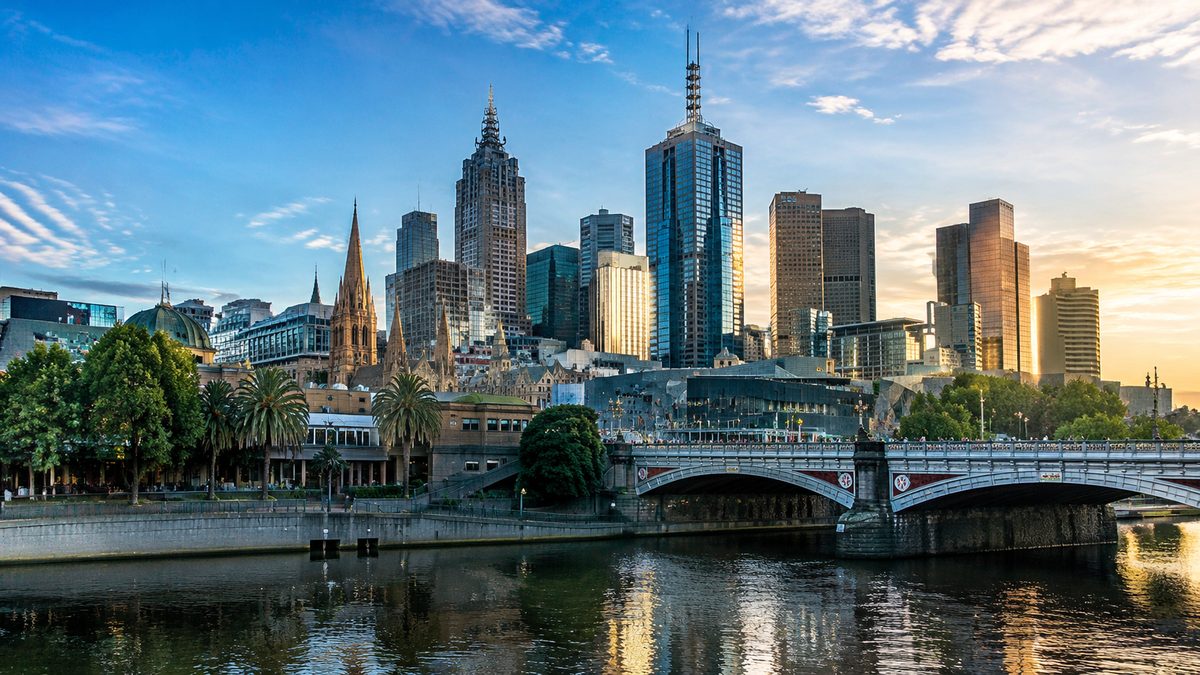
Melbourne is 190 years old in 2025. European settlement began in 1835, when John Batman and a group of settlers arrived on the northern banks of the Yarra River and claimed the land through a controversial deed with local Wurundjeri elders.
That deed was never legally recognised by the British Crown, but the settlement stuck. Within two decades, Melbourne had grown from a rough camp into one of the wealthiest cities in the world.
When Was Melbourne, Australia Founded?
The founding date most historians use is August 1835. That is when John Batman signed what he called a treaty with Wurundjeri elders, exchanging goods for around 600,000 acres of land. The British government voided the treaty almost immediately, declaring all land Crown property. But settlers kept coming anyway.
John Pascoe Fawkner sent a separate party of settlers in the same year, and they established a more permanent camp near the Yarra. By 1836, Governor Richard Bourke had formally recognised the settlement and ordered it surveyed.
Robert Hoddle laid out the famous Hoddle Grid in 1837, the street plan that still defines central Melbourne today. That grid, with its wide streets and narrow laneways, was drawn before most of the buildings existed.
What Was Melbourne Called Before It Was Named Melbourne?
Before it had an official name, the settlement was called Bearbrass, sometimes spelled Bearport or Bareheap depending on the source. The origin of that name is debated. Some historians link it to a corruption of a Wurundjeri word. Others think it came from early settlers describing the landscape.
Governor Bourke renamed the settlement Melbourne in 1837, in honour of British Prime Minister Lord Melbourne, William Lamb. The name stuck, and Bearbrass disappeared from maps almost overnight.
So if someone asks what Melbourne was called before it was named Melbourne, the answer is Bearbrass, and it only held that name for about two years.
How Old Is the City of Melbourne in 2025?
In 2025, Melbourne is 190 years old, counting from the 1835 settlement. If you count from when it was officially named and surveyed in 1837, it is 188 years old. Most historians use 1835 as the founding year.
The City of Melbourne as a formal local government area was incorporated in 1842, making that body 183 years old in 2025.
Who Were the Original Inhabitants of the Melbourne Area?
The Wurundjeri people of the Kulin Nation had lived in the Melbourne area for at least 40,000 years before European settlement. Some archaeological evidence suggests continuous occupation going back much further.
The Kulin Nation was a loose alliance of five language groups, including the Wurundjeri, Boonwurrung, Wathaurong, Taungurong, and Dja Dja Wurrung. The area around Port Phillip Bay was a meeting place and trading ground for several of these groups.
In my reading of the historical record, what stands out is how densely populated and actively managed this country was. The Yarra River floodplains were not wilderness. They were managed land, with eel traps, fish weirs, and seasonal burning practices that shaped the landscape Europeans walked into.
When Batman arrived in 1835, he was not discovering empty land. He was entering a place with thousands of years of continuous human history.
When Did Melbourne Become a City?
Melbourne was declared a city by royal charter in 1847. Queen Victoria granted the charter, which formally elevated Melbourne from a town to a city. At that point, the population was around 10,000 people.
What happened next was extraordinary. Gold was discovered in Victoria in 1851, and Melbourne became the entry point for a gold rush that drew people from across the world. Between 1851 and 1861, the population of Victoria grew from around 77,000 to over 500,000. Most of those people passed through or settled in Melbourne.
By the 1880s, Melbourne was known internationally as Marvellous Melbourne, a city of grand buildings, cable trams, and enormous wealth. It was, for a period, one of the largest and richest cities in the British Empire outside of London.
How Long Has Melbourne Been the Capital of Victoria?
Melbourne has been the capital of Victoria since Victoria became a separate colony in 1851. Before that, the Port Phillip District, which included Melbourne, was part of New South Wales with Sydney as its capital.
When Victoria separated from New South Wales on 1 July 1851, Melbourne became the colonial capital. It has held that role continuously since then, through federation in 1901 and to the present day. That makes Melbourne the capital of Victoria for 174 years as of 2025.
There is an interesting footnote here. Melbourne was also the temporary capital of Australia from 1901 to 1927, while Canberra was being built. The federal parliament sat in Melbourne's Exhibition Building and then the current State Parliament House during those years. Canberra officially became the national capital in 1927.
A Timeline of Melbourne's Key Dates
- 40,000+ years ago — Wurundjeri and Kulin Nation peoples establish continuous occupation of the Port Phillip region
- 1803 — A British attempt to settle Port Phillip at Sorrento fails within months
- 1835 — John Batman and John Pascoe Fawkner's parties establish the settlement later called Melbourne
- 1837 — Governor Bourke names the settlement Melbourne and Robert Hoddle surveys the city grid
- 1842 — The City of Melbourne is incorporated as a local government body
- 1847 — Queen Victoria grants Melbourne city status by royal charter
- 1851 — Victoria separates from New South Wales, Melbourne becomes colonial capital, gold rush begins
- 1880s — Melbourne reaches peak of its gold-era wealth, earns the name Marvellous Melbourne
- 1901 — Australian federation, Melbourne becomes temporary national capital
- 1927 — Parliament moves to Canberra, Melbourne remains Victoria's state capital
- 2025 — Melbourne is 190 years old and home to around 5.2 million people
What Made Melbourne Grow So Fast?
Three things drove Melbourne's early growth at a speed that was unusual even by colonial standards.
First, the gold rush. The 1851 discovery of gold at Ballarat and Bendigo turned Melbourne into a staging post for tens of thousands of migrants. Ships arrived daily. The city had to build fast and build big.
Second, wool. Victoria's pastoral industry generated enormous wealth through the second half of the 1800s. That money funded the grand public buildings, the university, the library, and the parks that still define the city.
Third, the port. Melbourne's position on Port Phillip Bay made it the natural commercial hub for south-eastern Australia. Trade flowed through it, and the infrastructure built to support that trade created jobs and drew more people.
What I find interesting is that Melbourne's growth was not planned in any meaningful sense. The Hoddle Grid gave the city centre a structure, but the suburbs sprawled outward with very little coordination. The result is a city that is both formally organised at its core and chaotically spread at its edges.
How Does Melbourne's Age Compare to Other Australian Cities?
Melbourne is not Australia's oldest city. That is Sydney, founded in 1788 when the First Fleet arrived at Port Jackson. Sydney is 237 years old in 2025, nearly 50 years older than Melbourne.
Here is how the major Australian cities compare by founding date:
- Sydney — 1788 (237 years old in 2025)
- Hobart — 1804 (221 years old)
- Brisbane — 1825 (200 years old)
- Perth — 1829 (196 years old)
- Adelaide — 1836 (189 years old)
- Melbourne — 1835 (190 years old)
Melbourne and Adelaide are almost exactly the same age. Melbourne edges it by one year. Both cities grew rapidly in the 1800s and both have strong identities built around that colonial-era wealth.
FAQ
How old is Melbourne, Australia in 2025?
Melbourne is 190 years old in 2025, counting from its founding in 1835.
When was Melbourne, Australia founded?
Melbourne was founded in August 1835 when John Batman's party arrived at the Yarra River and established a settlement.
What was Melbourne called before it was named Melbourne?
The settlement was called Bearbrass before Governor Bourke renamed it Melbourne in 1837.
When did Melbourne become a city?
Melbourne was declared a city by royal charter from Queen Victoria in 1847.
How long has Melbourne been the capital of Victoria?
Melbourne has been Victoria's capital since 1851, when Victoria became a separate colony. That is 174 years as of 2025.
Who lived in Melbourne before European settlement?
The Wurundjeri people of the Kulin Nation had lived in the Melbourne area for at least 40,000 years before European settlers arrived in 1835.
Was Melbourne ever the capital of Australia?
Yes. Melbourne served as the temporary national capital from 1901 to 1927, while Canberra was being constructed.
Is Melbourne older than Sydney?
No. Sydney was founded in 1788, making it about 47 years older than Melbourne.