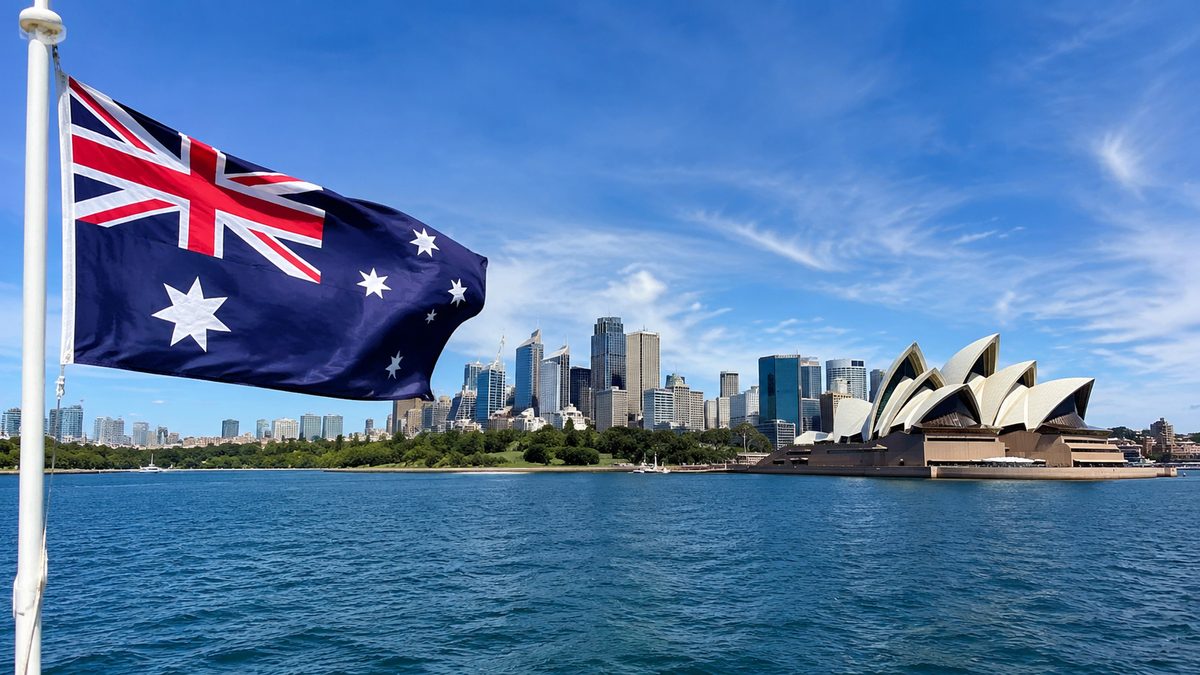
Most people know Australia has kangaroos and a big rock in the middle. That's about where general knowledge stops. The real story is far more interesting. I've spent years studying Australian history and what I found was that this country holds records, contradictions, and surprises that most textbooks skip entirely.
Here are 20 facts worth knowing.
Facts About Australian Wildlife
1. Australia has 21 of the world's 25 most venomous snakes
That's not an exaggeration. The inland taipan carries enough venom in a single bite to kill 100 adult humans. What I found interesting is that despite this, Australia averages only 2 to 4 snake bite deaths per year. Antivenom access and fast medical response keep that number low.
2. Kangaroos outnumber people
There are roughly 50 million kangaroos in Australia. The human population sits around 26 million. Kangaroos are not just wildlife, they are a dominant land animal on this continent.
3. The platypus is one of only five mammals that lay eggs
It also has venomous spurs on its hind legs, detects prey through electroreception, and has no stomach. When British scientists first saw a platypus specimen in 1799, they thought someone had sewn a duck's bill onto a beaver. They assumed it was a hoax.
4. Wombats produce cube-shaped droppings
No other animal does this. Scientists confirmed in 2018 that the shape forms inside the wombat's intestines due to varying elasticity in the intestinal walls. They use the droppings to mark territory, and the cube shape stops them rolling away.
5. Australia has more wild camels than any country except Saudi Arabia
Around one million feral camels roam the outback. They were imported in the 1800s to help build infrastructure across the desert interior, then released when trucks replaced them. They thrived.
Facts About Australia's Geography
6. Australia is the only continent that is also a single country
It covers 7.7 million square kilometres. That makes it larger than the continental United States, yet its population is smaller than Texas. The density gap between coastal cities and the interior is one of the most extreme of any nation on earth.
7. Lake Hillier is bright pink
Located on Middle Island in Western Australia, this lake stays pink year-round. The colour comes from a combination of algae, halobacteria, and high salt content. You can swim in it. It won't hurt you.
8. Australia has the world's longest fence
The Dingo Fence stretches 5,614 kilometres across southeastern Australia. Built in the 1880s to keep dingoes away from sheep grazing land, it is longer than the Great Wall of China. Maintenance crews still patrol it today.
9. The Great Barrier Reef is visible from space
It spans over 2,300 kilometres and contains more than 2,900 individual reefs. It is the largest living structure on earth, built by coral polyps over thousands of years. It supports around 1,500 species of fish and 4,000 types of mollusc.
10. Australia sits on the fastest-moving continental plate on earth
The Indo-Australian plate moves north at roughly 7 centimetres per year. This is fast in geological terms. GPS coordinates used for navigation in Australia need periodic recalibration because the continent physically shifts. In 2016, official coordinates were updated by 1.8 metres to correct for this drift.
Facts About Indigenous Australian Culture
11. Aboriginal culture is the oldest continuous culture on earth
Genetic and archaeological evidence places Aboriginal Australians on the continent for at least 65,000 years. Some estimates push that to 80,000 years. In my experience studying world history, no other culture has maintained continuous presence in one place for that length of time. For context, the Egyptian pyramids are around 4,500 years old.
12. There were over 250 distinct Aboriginal language groups before European settlement
Each had its own language, laws, and territorial boundaries. Today around 120 of those languages are still spoken. Linguists classify many of them as endangered, with fewer than 10 fluent speakers remaining.
13. Aboriginal Australians developed one of the earliest known astronomical traditions
Research published in the journal Australian Aboriginal Studies and work by astronomer Duane Hamacher documents that Aboriginal groups tracked star cycles to predict seasonal food sources, navigate land, and mark ceremonial calendars. Some of these traditions are estimated to be over 10,000 years old, making them among the oldest astronomical records anywhere.
Facts About Australia's History and Culture
14. Australia was the second country in the world to give women the right to vote
New Zealand was first in 1893. Australia followed in 1902. The United States did not achieve this until 1920. What I saw in the historical record was that Australian women could also stand for federal parliament from 1902, something New Zealand women could not do until 1919.
15. Australia once lost a war against emus
In 1932, the Australian military deployed soldiers with machine guns to cull emus damaging wheat crops in Western Australia. The emus scattered, regrouped, and proved nearly impossible to kill efficiently. After several weeks, the military withdrew. Major G.P.W. Meredith, who led the operation, reportedly said the emus could face machine guns with the invulnerability of tanks. The emus won.
16. Melbourne was nearly named Batmania
John Batman, one of the early settlers who negotiated land deals with local Aboriginal groups in 1835, gave his name to early settlement proposals. The name Batmania was used informally before Governor Richard Bourke officially named the settlement Melbourne in 1837 after the British Prime Minister of the time.
17. Australia has no official national language
English is the dominant language and used in government and law, but it has never been legislated as the official language. Around 300 languages are spoken across the country today, including Aboriginal languages, Mandarin, Arabic, Vietnamese, and Italian.
Facts About Australia's Population and Cities
18. Over 90 percent of Australians live on 1 percent of the land
The coastal fringe, particularly the southeast, holds almost the entire population. The interior, which makes up the vast majority of the continent, is largely uninhabited. Australia has one of the most concentrated urban populations relative to total land area of any country on earth.
19. Melbourne and Sydney argued over which city should be the capital for decades
Neither city would accept the other as capital. The compromise was to build an entirely new city, Canberra, roughly halfway between them. Construction began in 1913. Parliament did not move there until 1927. The rivalry between Melbourne and Sydney has never fully resolved.
20. Australia is one of the most multicultural countries on earth
Around 30 percent of Australia's population was born overseas. More than 200 nationalities are represented. In Melbourne specifically, over 160 languages are spoken. Post-World War II immigration programs, followed by waves of migration from Asia, the Middle East, and Africa, built a population profile unlike almost any other developed nation.
What Makes Australia Unique Compared to Other Continents?
Australia separated from the supercontinent Gondwana around 50 million years ago. That isolation produced an ecosystem found nowhere else. Roughly 80 percent of Australia's plants, mammals, and reptiles exist only here. The continent also holds what are 20 interesting facts about Australia in a single geographic package, from the world's oldest culture to its most venomous animals, all within one landmass.
The combination of extreme isolation, ancient Indigenous history, and rapid modern urbanisation creates a country that operates on multiple timescales simultaneously. That is genuinely unusual.
Frequently Asked Questions
How old is Australia's Indigenous culture?
At least 65,000 years, based on archaeological evidence from Madjedbebe rock shelter in the Northern Territory, published in Nature in 2017. This makes it the oldest continuous culture on earth by a significant margin.
What are some surprising facts about Australian wildlife?
Australia holds 21 of the world's 25 most venomous snakes, the world's largest population of feral camels, and the only mammals outside of monotremes that lay eggs. The platypus and echidna are both found here and nowhere else in the wild.
What are some little-known geographical facts about Australia?
The continent moves north at 7 centimetres per year, requiring GPS recalibration. It contains the world's longest fence at 5,614 kilometres. It has a permanently pink lake. And it is the flattest and driest inhabited continent on earth.
What interesting facts exist about Australia's population and cities?
Over 90 percent of Australians live on 1 percent of the land. Around 30 percent of the population was born overseas. Canberra exists only because Melbourne and Sydney refused to share capital status.
What are some fun or unusual facts about Australian history and culture?
Australia lost a military operation against emus in 1932. Melbourne was nearly called Batmania. Australia has no official national language despite English being dominant for over 200 years.