
What is Melbourne Most Well Known For? The City That Refuses to Be Ordinary
What is Melbourne most well known for? From world-class coffee to the MCG, explore the culture, sport, food and history that make Melbourne iconic.
Guides
2026-04-04
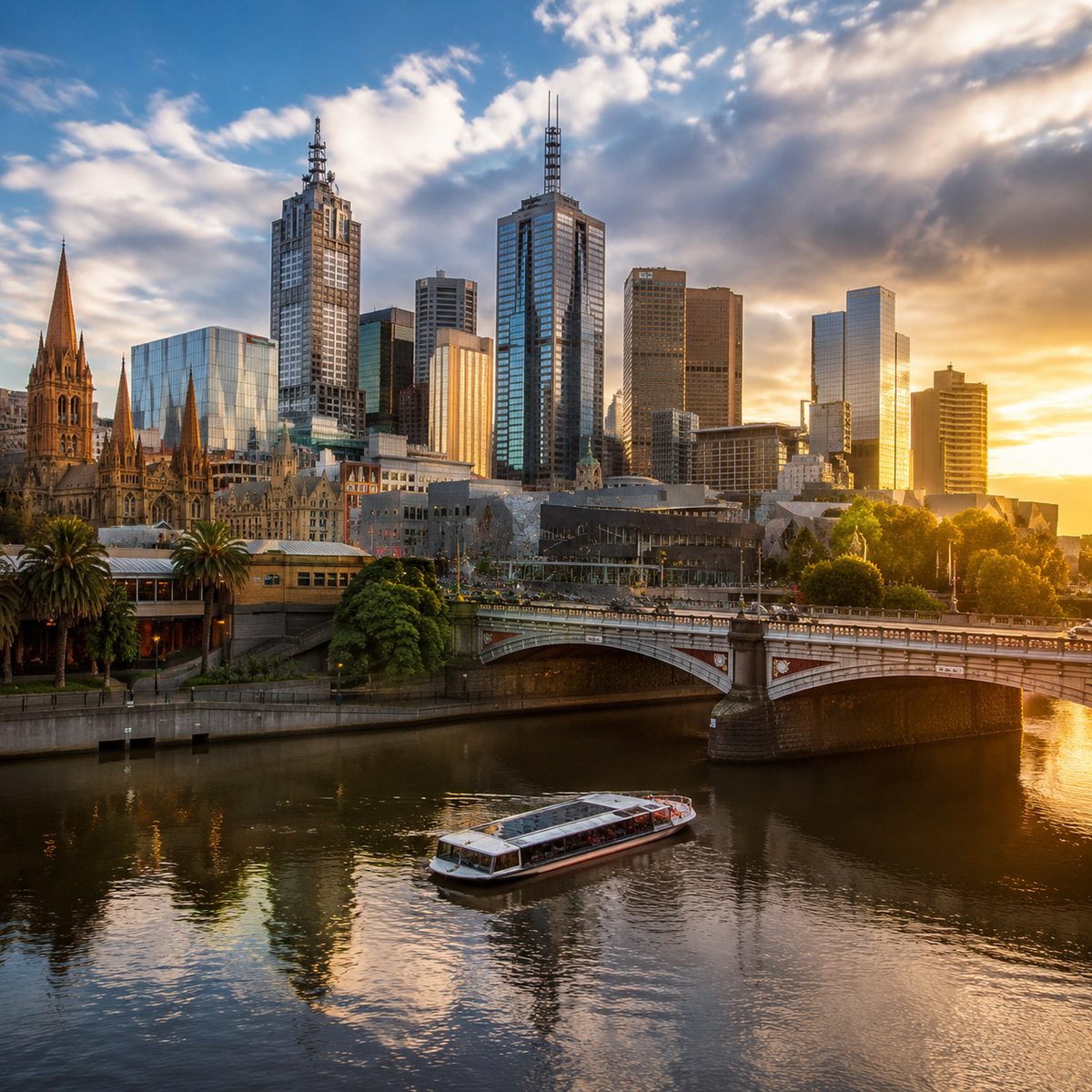
Melbourne is one of those cities that gets under your skin. It doesn't announce itself the way Sydney does — no single postcard image, no one defining moment. Instead, it accumulates. A laneway you stumble into. A coffee that resets your expectations. A Saturday at the MCG when 90,000 people are all breathing the same air. That accumulation is precisely what Melbourne is most well known for: a density of culture, sport, food, and civic life that no other Australian city has managed to replicate.
To understand what makes Melbourne distinctive, you have to understand what it was built on. This was a city that went from a pastoral outpost to one of the wealthiest cities on earth in under two decades, driven by the gold rushes of the 1850s. That sudden, violent prosperity left a permanent mark. Melbourne's founders had money and ambition simultaneously, which is a rare combination. They built grand public institutions — the State Library, the Royal Exhibition Building, the Melbourne Cricket Ground — before the city had fully worked out what it was. The result is a place with genuine civic infrastructure, the kind that takes generations to build and that shapes how people actually live.
Why Melbourne is Considered the Cultural Capital of Australia
The claim that Melbourne is Australia's cultural capital is not marketing. It is a structural reality rooted in history and sustained by investment.
When Victoria's gold rush wealth poured into the colony in the 1850s and 1860s, Melbourne's civic leaders made a deliberate choice to build institutions. The Public Library of Victoria — now the State Library — opened in 1856. The Melbourne Museum, the National Gallery of Victoria, the Royal Botanic Gardens: these were not afterthoughts. They were statements about what kind of city Melbourne intended to be. That institutional foundation created a cultural ecosystem that has compounded over 170 years.
Today that ecosystem includes the Melbourne Symphony Orchestra, the Australian Ballet, the Melbourne Theatre Company, and one of the most significant visual art collections in the Southern Hemisphere at the NGV. The Melbourne International Arts Festival, the Melbourne International Film Festival, and the Melbourne Fringe collectively make the city a year-round destination for serious cultural engagement, not just a seasonal event calendar.
The laneways are part of this story too. Hosier Lane, AC/DC Lane, Degraves Street — these narrow corridors became canvases for street art in the 1990s and early 2000s when the city was actively trying to reclaim its inner core after decades of suburban flight. The street art culture that emerged was not accidental. It was enabled by a council that chose tolerance over enforcement, and it created something genuinely original: an outdoor gallery that changes constantly and belongs to no one institution.
Melbourne's Coffee and Food Culture
Melbourne's coffee reputation is earned, and the history behind it matters. When Italian and Greek immigrants arrived in large numbers after World War II, they brought espresso culture with them. By the 1950s, Melbourne had café culture when the rest of Australia was still drinking instant. That head start of several decades is why Melbourne's coffee is structurally different from what you find elsewhere.
The flat white — contested as its origin may be — found its most sophisticated expression in Melbourne. The city's baristas developed a culture of craft around extraction, milk texture, and origin that preceded the global specialty coffee movement by years. When that movement arrived, Melbourne already had the infrastructure: the roasters, the training culture, the customer base that knew what good coffee tasted like.
Walk down Degraves Street or into any of the laneways off Flinders Lane and you are inside a coffee culture that has been refining itself for seventy years. The café is not just a place to get caffeine in Melbourne. It is a social institution, a workspace, a neighbourhood anchor.
The food culture extends well beyond coffee. Melbourne's restaurant scene reflects the city's immigration history with unusual directness. The post-war waves of Italian, Greek, Lebanese, Vietnamese, Chinese, and more recently East African and South Asian communities each left permanent marks on the food landscape. Victoria Street in Richmond is one of the most authentic Vietnamese food strips outside Vietnam. Lygon Street in Carlton carries the memory of the Italian community that built it, even as it has evolved. Footscray's food scene is a direct expression of its West African and Vietnamese communities.
This is not fusion for its own sake. It is the natural result of a city that has absorbed successive waves of migration and allowed each community to feed itself and, eventually, everyone else.
Major Sporting Events Melbourne is Known For
Sport in Melbourne is not a leisure activity. It is closer to a civic religion, and the Melbourne Cricket Ground is its cathedral.
The MCG — universally called the G — is the largest stadium in the Southern Hemisphere and one of the most historically significant sporting venues on earth. It hosted the 1956 Olympic Games. It has been the site of Ashes Tests since the 19th century. On Boxing Day, the Test match at the MCG draws crowds that would fill most European football stadiums. The ground sits inside Yarra Park alongside Melbourne Park, creating a sporting precinct of a scale and density that is genuinely unusual in world terms.
The Australian Open, held each January at Melbourne Park, is the first Grand Slam of the tennis calendar and consistently draws the largest crowds of any tennis tournament in the world. The fortnight transforms the eastern edge of the CBD into something between a festival and a city within a city.
The Melbourne Cup, run at Flemington Racecourse on the first Tuesday of November, stops the nation in a way that is difficult to explain to anyone who hasn't experienced it. It is a public holiday in metropolitan Melbourne. Offices across Australia pause. The race itself lasts three minutes and twenty seconds, but the day around it is a full cultural event.
The Formula 1 Australian Grand Prix at Albert Park opens the world championship calendar each March. The circuit runs around a lake in a public park, which gives it a character unlike purpose-built racing venues. The combination of urban setting, early-season timing, and Melbourne's general enthusiasm for spectacle makes it one of the most attended events on the F1 calendar.
Australian Rules Football — AFL — is the thread that runs through all of it. Melbourne is the birthplace and spiritual home of the game. On a winter Saturday afternoon, the city reorganises itself around football. The MCG and Marvel Stadium host matches simultaneously. The trams fill with scarves. The conversation in every café and pub is about the weekend's results. Nine of the eighteen AFL clubs are based in Victoria, which means the local rivalries carry a weight that interstate matches simply cannot replicate.
Melbourne's Most Famous Landmarks and Attractions
Melbourne's landmarks are not concentrated in one precinct. They are distributed across the city in a way that rewards exploration rather than a single tourist circuit.
The Royal Exhibition Building in Carlton Gardens is the only building in Australia with UNESCO World Heritage listing. Built for the 1880 Melbourne International Exhibition, it hosted the opening of the first Australian Parliament in 1901. It is a direct physical connection to the moment Australia became a nation.
Federation Square, opened in 2002, is the city's contemporary civic heart. Its angular, fractured geometry was controversial when it was built and remains so, but its function is undeniable. It is where Melbourne gathers for public events, where the NGV's Ian Potter Centre sits, where the Australian Centre for the Moving Image operates. It faces Flinders Street Station across the intersection of Flinders and Swanston Streets — the most photographed corner in Melbourne and, for generations of Melburnians, the default meeting point.
Flinders Street Station itself is worth dwelling on. Built in 1905 in Edwardian baroque style, its ochre dome and clocks are as recognisable as any image the city has produced. It is a working station — the busiest in Australia — which means its grandeur is not preserved behind glass. It is used daily by hundreds of thousands of people, which is exactly what its architects intended.
The Royal Botanic Gardens, established in 1846, occupy 38 hectares along the Yarra River south of the CBD. They are among the finest botanic gardens in the world by any serious horticultural measure, and they function as Melbourne's backyard in a way that formal parks in other cities rarely achieve. People run through them, picnic in them, attend outdoor cinema in them. They are genuinely public in the fullest sense.
The laneways of the CBD — Hosier Lane, Centre Place, Degraves Street, Hardware Lane — constitute a kind of hidden city within the grid. Melbourne's street grid was laid out in 1837 by Robert Hoddle, and the laneways were originally service corridors. Their transformation into the city's most characterful spaces is one of the more remarkable urban stories in Australian history.
Why People Choose to Live in Melbourne Over Other Australian Cities
Melbourne has been ranked among the world's most liveable cities by the Economist Intelligence Unit more times than any other city. That ranking measures stability, healthcare, culture, environment, education, and infrastructure. Melbourne scores consistently across all of them, which is the point — liveability is not one thing, it is the aggregate of many things working together.
The public transport network, centred on the tram system, is the largest operating tram network in the world. The trams are not a heritage attraction. They are the primary way large numbers of people move through the inner city, and they shape the street life of suburbs like Fitzroy, Collingwood, St Kilda, and South Yarra in ways that car-dependent cities simply cannot replicate. Getting around Melbourne without a car is genuinely possible in a way that is not true of most Australian cities.
The neighbourhood structure matters too. Melbourne's inner suburbs each have a distinct character that has been built over generations. Carlton is university and Italian heritage. Fitzroy is creative industries and working-class history. Richmond is Vietnamese food and football. St Kilda is beach and bohemia. Footscray is multicultural and rapidly changing. These are not marketing categories. They are the result of specific communities settling specific places and leaving specific marks.
Melbourne also has a climate that, despite its reputation for variability, is genuinely temperate. The four seasons are real. Winter is cold enough to matter but not brutal. Summer is hot but not the sustained extreme heat of inland cities. The variability — the famous four seasons in one day — is real, but it produces a population that is adaptable and, arguably, more engaged with the outdoors than the weather might suggest.
The education infrastructure is exceptional. The University of Melbourne consistently ranks among the top universities in the world. Monash, RMIT, La Trobe, Deakin, and Swinburne collectively make Melbourne one of the most significant university cities in the Asia-Pacific region. That concentration of universities shapes the city's intellectual culture, its café culture, its political culture, and its capacity to attract and retain skilled people.
The One Thing That Holds It Together
If there is a single idea that explains what Melbourne is most well known for, it is this: Melbourne is a city that takes its own civic life seriously.
That seriousness goes back to the gold rush generation who built public institutions before they had fully built the city. It runs through the football culture that treats a Saturday afternoon match as a genuine community event. It shows up in the coffee culture where the standard is maintained not by regulation but by collective expectation. It is visible in the street art that the council chose to protect rather than remove. It is present in the public transport network that connects neighbourhoods rather than just moving commuters.
Melbourne is not perfect. Its housing affordability crisis is severe. Its outer suburban sprawl is among the most extensive in the world. Its history of dispossession of the Wurundjeri and Boon Wurrung peoples of the Kulin Nation is a wound that has not been adequately addressed. These are real problems that a serious city has to reckon with seriously.
But the reason people keep choosing Melbourne — to visit, to study, to build careers, to raise families — is that the city has accumulated something that cannot be manufactured quickly: a genuine civic culture, built over 180 years, that makes ordinary life feel like it is worth showing up for.
That is what Melbourne is most well known for. Not one thing. The whole thing.
Related Articles
Continue reading: What is considered the best city in Australia?, What is famous in Melbourne to buy?.
Need professional help? Visit our services page.