
What is Melbourne's Best Kept Secret? The City's Hidden Side Revealed
What is Melbourne's best kept secret? Discover hidden neighbourhoods, secret bars, forgotten parks, and underground dining that most visitors never find.
Guides
2026-04-04
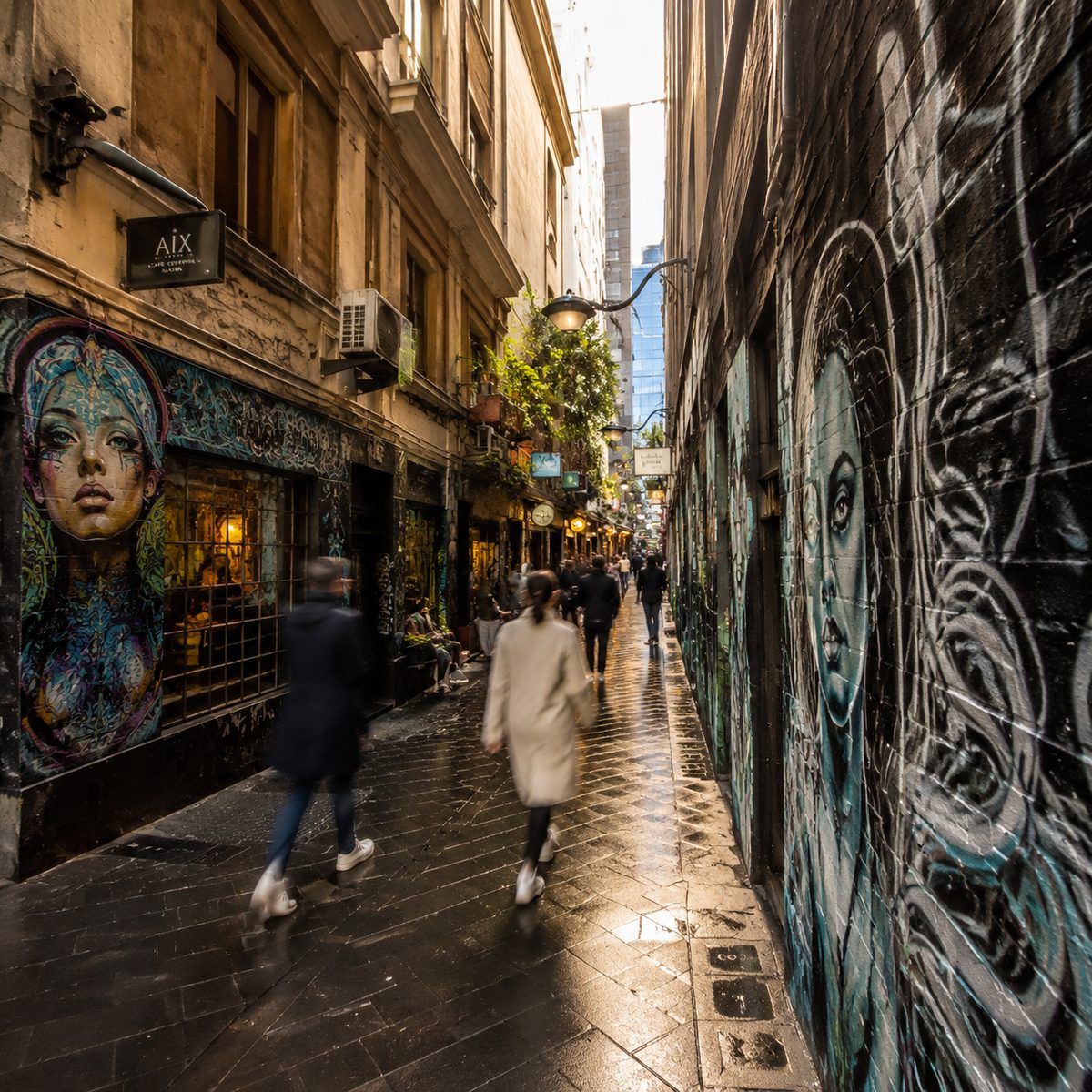
Melbourne's best kept secret is that the city rewards the curious and punishes the passive.
Most visitors do the loop. Federation Square, the MCG, Flinders Street Station, a coffee on Degraves. They leave thinking they've seen Melbourne. They haven't. Not even close.
Melbourne was built in layers. Gold rush money, immigrant ambition, working class grit, and a stubborn refusal to be ordinary. Those layers don't announce themselves. You have to go looking. And when you do, you find a city that is genuinely unlike anywhere else in Australia.
This is not about tourist tips. This is about understanding how Melbourne actually works, and where it hides the things it values most.
The Neighbourhoods Nobody Tells You About
Fitzroy gets all the attention. Collingwood gets the think pieces. But the real action has been shifting for years.
Footscray is the most honest suburb in Melbourne. It has not been polished for your comfort. The Vietnamese bakeries on Hopkins Street have been there for decades. The African grocers, the Ethiopian restaurants, the weekend market spilling onto the footpath. This is a suburb that feeds itself first and worries about Instagram later. Take the train from the City Loop and you are there in twelve minutes.
Thornbury sits on High Street and does not try hard. Record shops, a natural wine bar in a converted milk bar, a cinema that shows films you actually want to see. The people who live there are not performing a lifestyle. They are just living one.
Newport, down on the bay side, is what Williamstown was before Williamstown discovered itself. Old weatherboard houses, a pub that has not changed its carpet since 1987, and a foreshore that looks across to the city skyline without a single tour bus in sight.
These are the hidden neighbourhoods in Melbourne worth exploring if you want to understand the city rather than just photograph it.
Secret Bars and the Art of Finding Them
Melbourne has a long tradition of drinking in places that do not want to be found. This goes back further than the speakeasy trend. It goes back to the six o'clock swill, to the wowser laws that pushed pleasure underground, to a city that learned to enjoy itself quietly and behind closed doors.
The secret bars in Melbourne are not all secret in the same way. Some hide behind unmarked doors. Some sit below street level. Some require a reservation made through a phone number passed between friends.
The Everleigh in Fitzroy is not hidden but it behaves like it is. No sign out front worth noticing. A room that feels like 1920s New York decided to relocate to Smith Street. The cocktails are serious. The bartenders know things.
Beneath Caledonian Lane in the CBD there are bars that have been operating for years without ever appearing on a mainstream list. You find them by walking slowly and looking down. Melbourne rewards people who look down. The city has always built downward as much as upward.
Eau de Vie on Malthouse Lane operates behind a door that looks like a wall. The password changes. The drinks do not disappoint. This is the kind of place that makes you feel like Melbourne is letting you in on something.
The tradition of the hidden bar here is not a gimmick. It is a genuine expression of how this city thinks about pleasure. Private. Earned. Worth the effort.
Day Trips That Most People Miss
The Mornington Peninsula gets crowded. The Yarra Valley gets crowded. The Great Ocean Road gets very crowded.
The underrated day trips from Melbourne are the ones that require a slightly different direction.
The Werribee Gorge is forty minutes west of the city and feels like a different planet. Volcanic rock, a river running cold and clear, walking tracks that are genuinely challenging. Almost nobody goes there. The car park is never full.
Daylesford is known but the country around it is not. The road between Trentham and Blackwood passes through forest that has barely changed since the gold rush. There is a waterfall at Trentham that drops thirty metres into a fern gully. On a weekday in winter you will have it entirely to yourself.
The Macedon Ranges sit an hour north of the city and contain some of the oldest European settlement in Victoria outside Melbourne itself. Kyneton has a main street of bluestone buildings and a farmers market that is the real thing, not a performance of one. The food is grown nearby. The people selling it grew it.
Phillip Island without the penguins is a different place entirely. The western end of the island, past Rhyll, has a mangrove boardwalk and a bird hide that looks over a wetland full of spoonbills and herons. Completely free. Almost always empty.
Food Markets and Dining That Stays Underground
The Queen Victoria Market is not a secret. But what happens around it and because of it is.
The traders who supply the QVM have their own networks. The wholesale section that opens before dawn. The Vietnamese sandwich shops on the northern edge that have been feeding market workers since the 1980s. The cheese vendor who will sell you things that never appear on the public stalls if you ask the right way.
The secret food markets and dining experiences in Melbourne tend to operate on trust. You hear about them from someone who heard about them from someone else. A Sunday morning dumpling kitchen in a Footscray warehouse. A Somali lunch spot in Flemington that seats twelve people and has no menu. A Japanese chef in Fitzroy North who does a ten-seat omakase from his home kitchen twice a month.
These places do not advertise because they do not need to. Melbourne has enough people who are serious about eating to fill a twelve-seat room every time without a single social media post.
The Prahran Market is underused by people who are not locals. The fishmonger on the south side has been there for three generations. The spice shop in the middle sells things you cannot find anywhere else in the city. Go on a Tuesday morning when the weekend crowd is gone and the traders have time to talk.
Street Art Beyond the Lane
Hosier Lane is a postcard. It is also genuinely good. But it is one lane in a city that has been treating its walls as a public gallery for forty years.
The hidden street art spots in Melbourne beyond Hosier Lane require some walking.
Rutledge Lane, directly behind Hosier, turns over faster and gets less attention. The work there is often newer and more experimental. Artists use it as a testing ground.
The Collingwood warehouse district along Johnston Street and its side streets has walls that have been painted and repainted since the 1990s. Some of the older work has been preserved under newer layers and occasionally resurfaces when a section peels. The area around the old Foy and Gibson building is particularly dense.
Fitzroy North has a stretch of laneways between Brunswick Street and Smith Street that most people walk past without looking up. The work there tends toward the political and the large scale. Some of it has been there for a decade. Some of it appeared last week.
In Footscray, the walls along Nicholson Street and around the train station have been used by artists from the local community for years. The work reflects the suburb. It is not decorative. It is a conversation.
The best way to find street art in Melbourne is to walk slowly in industrial areas and look at everything. The city has never stopped painting itself.
Green Spaces That the City Forgot to Advertise
The Royal Botanic Gardens are magnificent and everyone knows it. The Dandenong Ranges are beautiful and everyone goes there. But Melbourne has green spaces that sit quietly and wait.
Merri Creek runs from Coburg down through Fitzroy North and Clifton Hill to the Yarra. The trail along it passes through remnant grassland, past Aboriginal scarred trees, under bridges covered in moss. You can walk for two hours without crossing a main road. Almost nobody does this.
The Organ Pipes National Park is twenty minutes north of the airport and contains a geological formation that looks like it belongs in Iceland. Basalt columns formed by ancient lava flows, a creek running through a narrow canyon. The park is tiny. The experience is not.
Westgate Park sits under the Westgate Bridge and was built on a former industrial wasteland. It has a pink lake that turns colour depending on the season, a wetland full of migratory birds, and a view of the bridge from below that is genuinely dramatic. It is also almost always empty.
The secret green spaces hidden in Melbourne tend to be the ones that required effort to create or that sit in unfashionable postcodes. The city built them and then forgot to tell anyone.
Jells Park in Wheelers Hill is a regional park with a lake, walking trails, and a wetland that attracts more than 150 species of birds. It is enormous. On a weekday it feels like a private garden.
Why Melbourne Keeps Its Secrets
There is something deliberate about how Melbourne manages its hidden places. The city has a long tradition of valuing things that require effort to find. This is partly cultural. Melbourne was settled by people who came from far away and built something from nothing. They did not advertise what they had built. They just built it and let it speak.
It is also partly practical. A city of five million people needs pressure valves. Places that are not overwhelmed. Spaces where the people who live there can still feel at home.
The best way to use Melbourne's public transport network, including the trains and trams that connect all of these places, is to treat it as an exploration tool rather than a commuting tool. Get on a train with no particular destination. Get off somewhere you have never been. Walk slowly. Look at everything.
That is how Melbourne reveals itself. Not all at once. Gradually, over years, to people who are paying attention.
Frequently Asked Questions
What is Melbourne's best kept secret?
Melbourne's best kept secret is that its most rewarding experiences are in the suburbs and laneways that never appear on tourist maps.
What hidden neighbourhoods in Melbourne are worth exploring?
Footscray, Thornbury, and Newport offer genuine local culture without the crowds or the performance of trendiness.
Are there any secret bars or speakeasies in Melbourne?
Yes, bars like Eau de Vie and the spaces beneath Caledonian Lane operate behind unmarked doors and reward people who look for them.
What are Melbourne's most underrated day trips?
Werribee Gorge, the Trentham to Blackwood road, and the western end of Phillip Island are all within ninety minutes of the city and almost always uncrowded.
What secret food markets or dining experiences does Melbourne offer?
Small underground dining rooms in Footscray and Fitzroy North, and the wholesale edges of the Prahran Market, offer food experiences that never appear on mainstream lists.
Are there hidden street art spots in Melbourne beyond Hosier Lane?
Rutledge Lane, the Collingwood warehouse district, and the walls around Footscray station all carry significant work that most visitors never see.
What secret green spaces or parks are hidden in Melbourne?
The Merri Creek trail, Organ Pipes National Park, and Westgate Park are all significant natural spaces that the city has never properly advertised.
Related Articles
Continue reading: What to do on a short trip to Melbourne?, Is Sydney a bigger city than Melbourne?.
Need professional help? Visit our services page.