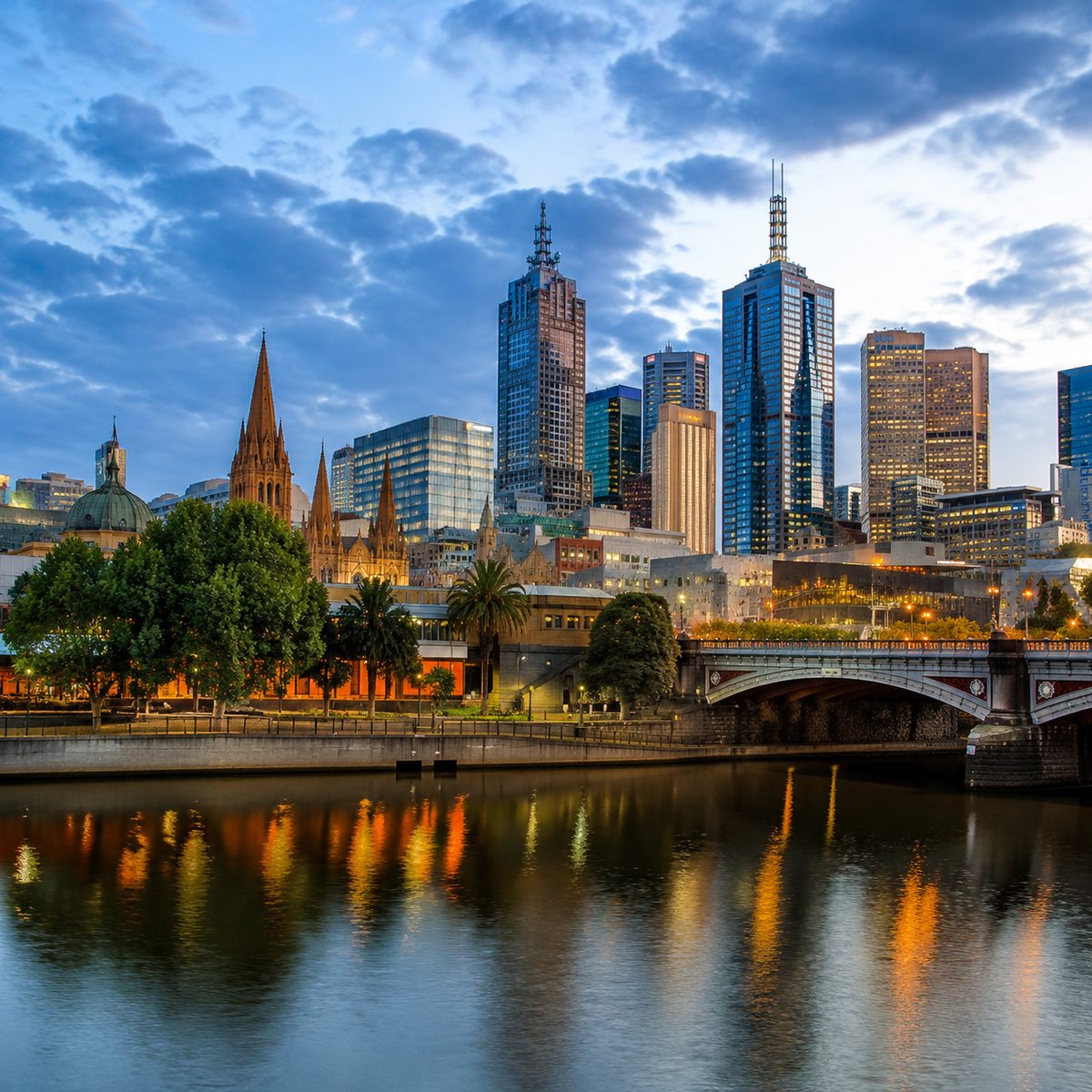
Australia has no shortage of cities that punch above their weight on the world stage. Sydney's harbour is one of the most photographed places on earth. Brisbane is riding a wave of momentum into the 2032 Olympics. Perth sits at the edge of the Indian Ocean with a confidence that comes from being genuinely remote and genuinely prosperous. But when you ask which city actually holds the top position — by the measures that matter most — the answer keeps coming back to Melbourne.
That's not a casual observation. It's a conclusion backed by decades of urban data, repeated international rankings, and a depth of civic identity that no other Australian city has quite managed to replicate. Melbourne earned the title of World's Most Liveable City from the Economist Intelligence Unit seven consecutive times between 2011 and 2017. It has never fully relinquished that reputation, even as Vienna and other European cities have taken the top spot in recent years. The infrastructure, the cultural density, the sheer variety of urban experience — Melbourne built something that takes generations to construct, and it shows.
Sydney vs Melbourne: Australia's Oldest Rivalry
The Sydney-Melbourne debate is the most durable argument in Australian public life. It predates Federation. When the colonies were negotiating the terms of nationhood in the 1890s, the rivalry between these two cities was so intense that neither could accept the other as capital — which is precisely why Canberra exists at all.
Sydney has the numbers on its side in some respects. It is Australia's largest city by population, home to roughly 5.3 million people compared to Melbourne's 5.1 million — though Melbourne's growth trajectory means it is on track to overtake Sydney as the most populous city in Australia within the next decade. Sydney also wins on international name recognition. The Opera House and the Harbour Bridge are global icons in a way that Federation Square, for all its architectural ambition, simply is not.
But population size and postcard recognition are not the same as liveability or urban quality. Sydney is extraordinarily expensive, with housing affordability that has pushed working and middle-class residents further and further from the centre. Its public transport network, while functional, has struggled to keep pace with growth. The city's geography — beautiful, dramatic, defined by water — also fragments it in ways that make cohesive urban planning genuinely difficult.
Melbourne's grid, laid out by Robert Hoddle in 1837, gave the city a structural logic that has served it well for nearly two centuries. The inner suburbs are walkable. The tram network — the largest operating tram network in the world outside of a handful of European cities — connects neighbourhoods in a way that feels organic rather than imposed. The city grew outward from a centre that still functions as a centre, which is rarer than it sounds.
What is the Most Visited City in Australia by Tourists?
Sydney consistently attracts more international tourists than any other Australian city. The harbour, the beaches, the Opera House — these are the images that appear in international travel campaigns, and they deliver. For a first-time visitor to Australia arriving with two weeks and a bucket list, Sydney is often the logical starting point.
Melbourne, however, draws a different kind of visitor — and increasingly, a repeat visitor. The city's appeal is less about singular landmarks and more about accumulated experience. The laneways. The coffee culture that genuinely influenced how specialty coffee developed globally. The food scene that reflects waves of migration from southern Europe, Southeast Asia, East Africa, and the Middle East in ways that have produced something genuinely distinctive rather than merely multicultural in a superficial sense.
Domestic tourism data consistently shows Melbourne as a preferred destination for Australians themselves — people who have already seen the Opera House and are now looking for somewhere with more texture. The Australian Open draws over 800,000 attendees annually. The Melbourne Cup stops the nation. The AFL Grand Final is the largest single-day sporting event in the Southern Hemisphere. These are not niche attractions. They are cultural institutions with genuine national weight.
What is the Capital City of Australia?
This question trips up a surprising number of people, including some Australians. Canberra is the capital city of Australia — not Sydney, not Melbourne. The Australian Capital Territory was established specifically to resolve the Federation-era rivalry between the two dominant colonies. Canberra was purpose-built as a capital, with construction beginning in earnest after World War One, and it has housed the federal parliament since 1927.
Canberra is a genuinely interesting city in its own right — well-planned, green, home to excellent national institutions including the National Gallery, the War Memorial, and the National Library. But it has a population of around 460,000 and has never functioned as a commercial or cultural hub in the way that Sydney and Melbourne do. The capital question and the question of which city is actually number one are, in practice, entirely separate conversations.
Which Australian City Has the Best Quality of Life?
Quality of life is a composite measure, and different indices weight different factors. But across the major international rankings — the EIU Liveability Index, Mercer's Quality of Living Survey, the Global Liveability Index — Melbourne appears at or near the top with a consistency that no other Australian city matches.
The factors that drive those rankings are worth unpacking:
- Stability: Melbourne scores consistently high on social and political stability, low crime relative to comparable global cities, and institutional reliability.
- Healthcare: Access to public and private healthcare in Melbourne is among the best in the world. The concentration of major hospitals, research institutions, and specialist services in the inner city is significant.
- Education: Melbourne is home to the University of Melbourne, consistently ranked in the global top 50, along with Monash, RMIT, and La Trobe. The density of educational infrastructure shapes the character of the city's inner suburbs in ways that are hard to overstate.
- Infrastructure: The tram network, the train system, the cycling infrastructure, the walkability of the inner city — Melbourne's transport options give residents genuine choices about how they move through the city.
- Culture and environment: The concentration of galleries, theatres, live music venues, restaurants, and green space within accessible distance of the city centre is exceptional by any global standard.
Brisbane and Adelaide have made genuine strides in liveability over the past decade. Perth offers space, sunshine, and a quality of life that its residents defend with considerable passion. But the depth of Melbourne's offering — the sheer density of things to do, see, eat, and experience within a compact urban core — remains unmatched in Australia.
Melbourne's Urban Identity: Built Over Generations
What makes Melbourne's position at the top of Australian urban life interesting from a historical perspective is that it was not inevitable. The city's dominance in the late nineteenth century — the so-called Marvellous Melbourne era of the 1880s, when it was one of the wealthiest cities in the world — collapsed spectacularly in the depression of the 1890s. Sydney overtook it in population. The federation capital went elsewhere. Melbourne spent much of the twentieth century in a kind of civic introspection, building quietly rather than performing loudly.
That quietness produced something durable. The inner-suburb housing stock — the Victorian and Edwardian terraces of Fitzroy, Collingwood, Carlton, Richmond — survived the mid-century enthusiasm for demolition that gutted comparable neighbourhoods in other cities. The laneways that now define Melbourne's café and bar culture were preserved partly by accident and partly by a planning culture that, from the 1970s onward, began to take heritage seriously.
The waves of postwar migration — Italian and Greek communities in the 1950s and 60s, Vietnamese communities from the late 1970s, more recent arrivals from India, China, and the Horn of Africa — layered into a city that had the physical structure to absorb them. Brunswick Street, Victoria Street in Richmond, Footscray's main strip: these are not tourist constructions. They are the product of communities that settled, built businesses, and changed the character of their neighbourhoods over decades.
Getting Around Melbourne: The Network That Holds It Together
Any serious discussion of Melbourne as Australia's number one city has to reckon with its public transport network. The tram system is the most visible part of it — 250 kilometres of track, 1,700 tram stops, 24 routes covering the inner and middle suburbs in a way that makes car ownership genuinely optional for many residents. The free tram zone in the CBD means that moving around the city centre costs nothing.
The train network extends the reach of the city into the outer suburbs and regional Victoria. Buses fill the gaps. The cycling infrastructure, while still developing, has expanded significantly over the past decade. For a city of Melbourne's size, the integration of these systems — imperfect as it remains in places — gives residents a level of mobility that directly contributes to the quality of life rankings.
This is not incidental to Melbourne's claim as Australia's top city. Urban mobility shapes everything: where people can afford to live, how long they spend commuting, whether they can access employment and cultural life without owning a car. Melbourne's network, built incrementally over more than a century, is one of the structural reasons the city works as well as it does.
The Honest Accounting
Melbourne is not without its problems. Housing affordability has deteriorated sharply over the past two decades. The outer suburban sprawl — some of the fastest-growing fringe suburbs in the developed world — creates genuine challenges around infrastructure provision and community cohesion. The city's response to the COVID-19 pandemic, which included the longest cumulative lockdown of any city in the world, left marks on the urban economy and on the collective psychology of its residents that are still being worked through.
But cities are not static. They are processes, not products. What Melbourne has demonstrated over its nearly two centuries of urban development is a capacity to absorb disruption, adapt its physical form, and maintain the civic density that makes urban life worth living. The laneways filled back up. The restaurants reopened. The trams kept running.
When people ask what the number one city in Australia is, they are really asking where the best version of Australian urban life is being lived. The answer, by most serious measures and by the accumulated weight of what the city has built, is Melbourne.