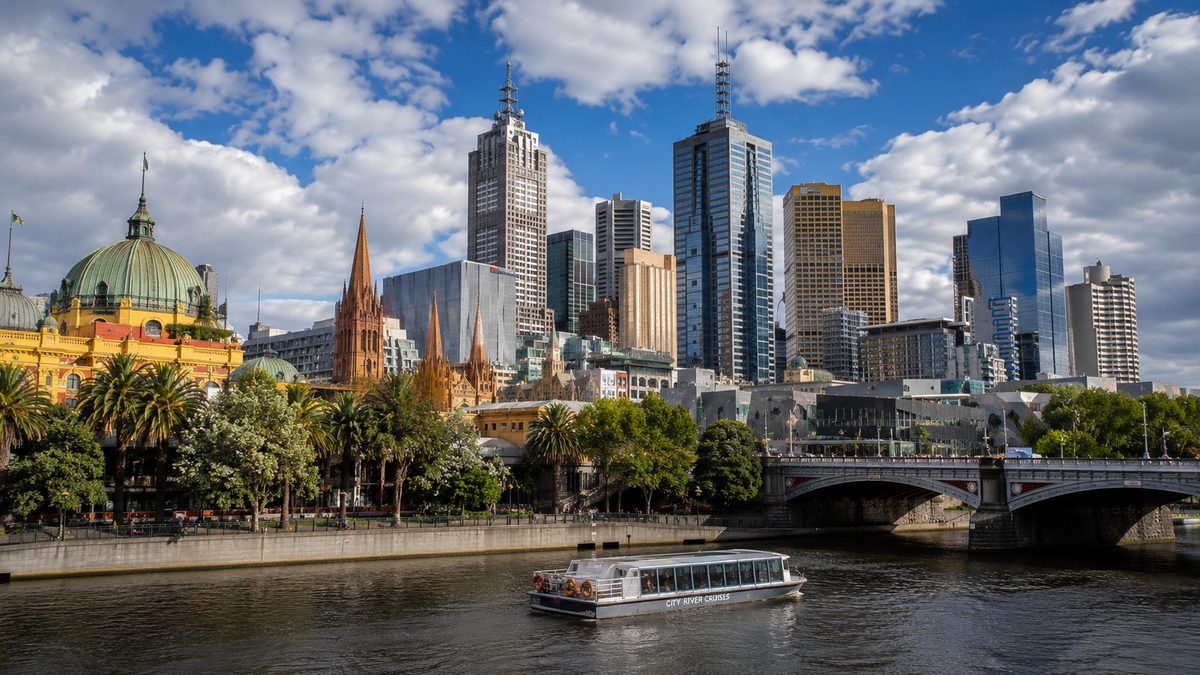
Melbourne rewards people who move through it with intention. A few hours here can feel richer than a week somewhere else, if you know where to point yourself.
This guide cuts straight to what actually works.
What Should You Do First When You Arrive in Melbourne?
Get on the tram. Seriously.
Melbourne's free tram zone covers the entire CBD, and it's the fastest way to understand how the city is laid out. Hop on any tram running through the city centre and ride it end to end. You'll pass Flinders Street Station, Federation Square, the Queen Victoria Market precinct, and the arts district in one loop.
Most visitors waste their first hour trying to walk everywhere. The city blocks look short on a map but the laneways, arcades, and detours add up fast. Use the tram to anchor yourself, then walk the sections that interest you.
Flinders Street Station is worth five minutes of your time just to stand outside it. The corner of Flinders and Swanston is the unofficial heartbeat of the city. Everything is within reach from there.
What to Do in Melbourne for a Few Hours?
If you have two to four hours, pick one neighbourhood and go deep rather than skimming three.
The CBD laneways are the most concentrated experience Melbourne offers. Hosier Lane for street art. Degraves Street for coffee and people-watching. Centre Place for the feeling that you've found something most tourists miss. These are all within a five-minute walk of each other.
The Royal Botanic Gardens is the most underused short-trip option in the city. It's free, it's fifteen minutes from the CBD on foot or a short tram ride, and it genuinely changes your mood. Walk in from the Domain Road entrance and follow the lake path.
If you want culture fast, the National Gallery of Victoria on St Kilda Road is free for the permanent collection. The Ian Potter Centre at Federation Square covers Australian art specifically and is also free. Both are worth an hour each.
For food in a short window, head to the Queen Victoria Market if it's open (closed Mondays and Tuesdays). The deli hall alone is worth the trip. Otherwise, any café on Degraves Street or Hardware Lane will give you a proper Melbourne coffee experience.
How Do You Spend 3 Days in Melbourne Without Wasting Time?
Three days is enough to feel like you actually know the city. Here's how to structure it.
Day One: The City Core
Start at the Queen Victoria Market early. The atmosphere before 10am is different from midday. Grab breakfast from one of the food stalls, then walk south through the CBD toward the laneways. Spend the middle of the day exploring Hosier Lane, the Royal Arcade (Melbourne's oldest shopping arcade, built in 1869), and the Block Arcade. Have lunch on Degraves Street.
In the afternoon, cross the Yarra River to Southbank. The riverside walk from Flinders Street to the Arts Centre takes about twenty minutes and gives you the best view of the city skyline. The Crown precinct is here if you want it, but the walk itself is the point.
Evening in Chinatown on Little Bourke Street. It's one of the longest continuous Chinese settlements in the Western world and the food is genuinely good, not tourist-grade.
Day Two: The Inner Suburbs
Fitzroy and Collingwood sit just north of the CBD and feel like a different city. Brunswick Street in Fitzroy has independent bookshops, vintage clothing, and cafés that have been there for decades. Smith Street in Collingwood runs parallel and has a slightly grittier, more interesting mix of bars, galleries, and food.
Take the 86 tram from Bourke Street straight up to Fitzroy. Walk Brunswick Street from Johnston Street down toward the city. Stop at Readings bookshop. Have lunch at any of the spots on Smith Street.
In the afternoon, St Kilda is worth the trip. The 96 tram from Bourke Street Mall takes you directly there. Acland Street for cake shops and people-watching. The foreshore for a walk. Luna Park if you have kids or just want to look at the face. The Esplanade Hotel (the Espy) for a drink in the late afternoon.
Day Three: Out of the City
This is where most short-trip guides fail you. They send you to the Dandenong Ranges or the Yarra Valley without telling you how long it actually takes. Both are doable in a day but require a car or a tour.
If you're relying on public transport, the Dandenong Ranges are accessible via train to Belgrave, then a short bus connection. The Puffing Billy steam railway from Belgrave to Gembrook is a genuine experience, not a tourist trap.
The Mornington Peninsula is another option. Train to Frankston, then bus connections south. The peninsula has wineries, beaches, and hot springs at Peninsula Hot Springs near Rye. Book the hot springs in advance.
If you want to stay closer, Williamstown is a thirty-minute train ride from the city and feels like a coastal village. The beach, the heritage streetscape, and the views back to the Melbourne skyline make it one of the most underrated half-day trips from the CBD.
Where to Go for a Few Days in Victoria Beyond Melbourne?
Victoria is compact enough that you can reach genuinely different landscapes within two hours of the city.
The Great Ocean Road is the obvious answer and it earns that reputation. The Twelve Apostles are about three hours from Melbourne by car. If you only have one day, drive to Lorne (two hours), walk the Erskine Falls trail, have lunch, and come back. That's a full and satisfying day without rushing to the Apostles.
Phillip Island is two hours southeast. The Penguin Parade at dusk is one of those experiences that sounds corny until you're sitting on the beach watching hundreds of little penguins waddle in from the ocean. Book tickets online before you go.
Ballarat and Bendigo are both about ninety minutes by train from Southern Cross Station. Both are gold rush cities with serious architecture, good food scenes, and museums that are better than you'd expect. Ballarat has Sovereign Hill, an open-air living museum of the 1850s gold rush. It's genuinely worth half a day.
The Yarra Valley is an hour east of the city and has over fifty wineries. Healesville Sanctuary is here too, which is one of the best places in Australia to see native wildlife up close. Combine the two for a full day.
Getting Around Melbourne: What Actually Works
The myki card is the public transport smartcard for Melbourne. You can buy one at 7-Eleven stores, at the airport, or at major train stations. Load it with credit and tap on and off for trams, trains, and buses. The daily cap means you stop being charged after a certain amount, so you can ride all day without worrying about cost.
The free tram zone covers the entire CBD grid. If you're staying in the city centre, you may not need to touch your myki at all for the first day. Trams run frequently and the network map is straightforward once you understand that most routes run north-south or east-west through the city.
Trains are the fastest way to reach the inner suburbs and regional connections. Southern Cross Station handles regional V/Line trains to Ballarat, Bendigo, Geelong, and the Dandenong Ranges. Flinders Street Station is the hub for metropolitan lines.
For real-time timetables, service alerts, and journey planning, the Metlink Melbourne website is the official source. Use it before you leave your accommodation each morning to check for any disruptions.
One Thing Most Melbourne Travel Guides Get Wrong
Most guides treat Melbourne's food scene as a highlight reel of expensive restaurants. What they miss is that the best food experiences here are cheap and fast. A banh mi from a Vietnamese bakery on Victoria Street in Richmond costs under six dollars and is better than most sit-down meals. The dumplings on Little Bourke Street. The falafel wraps in Fitzroy. The Ethiopian restaurants on Sydney Road in Brunswick.
Melbourne's food culture was built by waves of immigration, and the most authentic versions of that food are in the suburbs, not the CBD. If you have a day in Fitzroy or Richmond, eat where the locals eat, not where the hotel concierge sends you.
The second thing guides miss: Melbourne's weather changes fast. Four seasons in one day is a cliché because it's true. Pack a light layer even in summer. A sudden cold change in the afternoon can drop the temperature by fifteen degrees in an hour.
FAQ
Is $80,000 a good salary in Melbourne?
Yes, for a single person. The median full-time salary in Melbourne sits around $72,000 to $75,000, so $80,000 puts you above average. Rent for a one-bedroom apartment in the inner suburbs runs $1,800 to $2,400 per month. You can live comfortably on $80,000 without stretching, though buying property is a different conversation entirely.
How many days do you need in Melbourne?
Three days covers the city well. Five days lets you add one or two regional day trips. Anything under two days means you'll only scratch the surface of one or two neighbourhoods.
Is Melbourne easy to get around without a car?
For the city and inner suburbs, yes. The tram and train network is reliable and covers most of what short-trip visitors want to see. For regional Victoria, a car gives you significantly more flexibility. Tours are available for the Great Ocean Road and Phillip Island if you don't want to drive.
What is Melbourne most known for?
Coffee, street art, sport, and food. The café culture here is serious. Melbourne claims to have invented the flat white (Sydney disputes this). The laneways street art scene started in the early 2000s and has grown into one of the most significant in the world. The MCG (Melbourne Cricket Ground) holds 100,000 people and is considered a cathedral by locals.
When is the best time to visit Melbourne?
March to May (autumn) and September to November (spring) are the most comfortable. Summer (December to February) can hit 40°C on bad days. Winter is mild by global standards but grey and rainy. The Australian Open tennis is in January, the Formula 1 Grand Prix in March, and the AFL Grand Final in late September.
Do I need to book restaurants in advance?
For popular spots, yes. Melbourne's best restaurants book out weeks ahead on weekends. For casual dining, laneways cafés, and ethnic restaurants, you can usually walk in. If you have a specific place in mind, book it the day before at minimum.
What to Do Next
Before your trip, download the Metlink app or bookmark metlinkmelbourne.com.au for live timetables and journey planning. Pick your myki card up from a 7-Eleven on your first day. Choose one neighbourhood per half-day rather than trying to cover the whole city at once.
And eat somewhere that doesn't have a menu in English. That's where the best meals are.

Armstrong Lazenby
BSc (Human Nutrition) registered nutritionist. Bachelor of Science (Exercise Science major) Master of Sports Medicine.