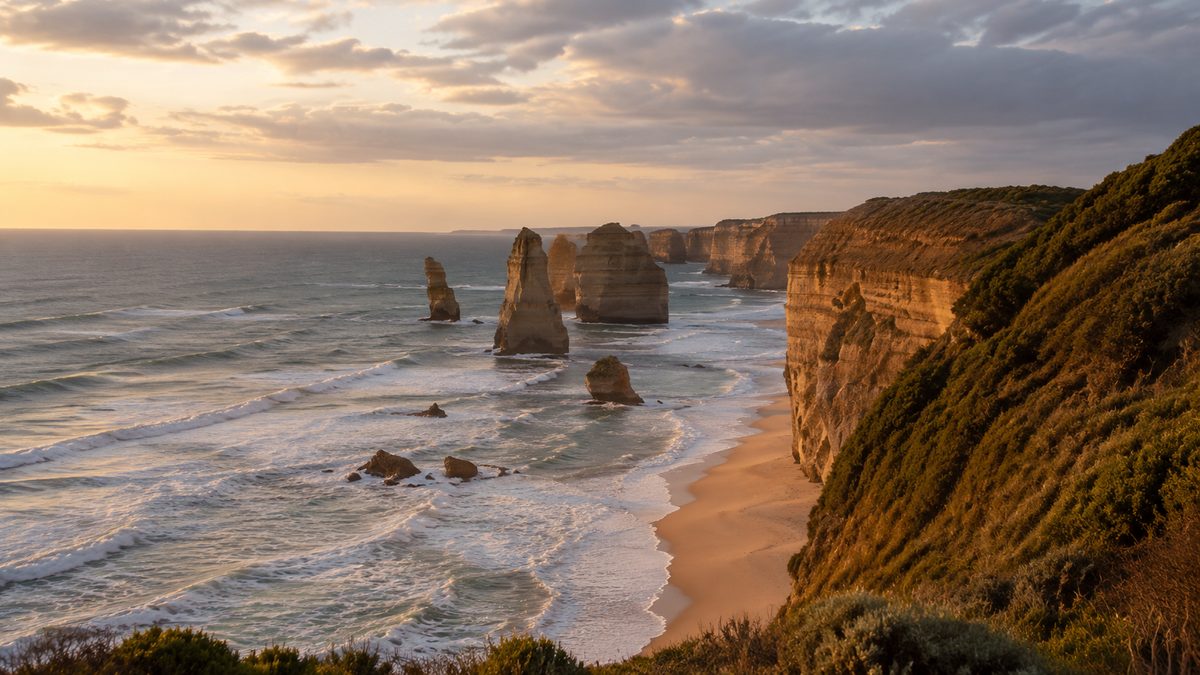
Four days in Victoria is enough to cover serious ground. Not everything, but the best of it. I have spent years studying how people move through this state and what I found is that most visitors waste a full day making decisions they could have made before they arrived.
This itinerary fixes that. It covers where to go in Victoria for 4 days in a way that is realistic, not aspirational. Every stop earns its place.
Is 4 Days Enough to See Victoria?
Yes, if you pick a direction and commit to it. Victoria is about 237,000 square kilometres. You are not seeing all of it. What you can do is see one or two regions properly rather than five regions badly.
In my experience, the visitors who enjoy Victoria most are the ones who slow down in fewer places. The ones who rush from the Grampians to Phillip Island to the Dandenongs in four days come away feeling like they watched a highlight reel with no sound.
Pick a focus. Go deep. That is the move.
What Are the Best Places to Visit in Victoria in 4 Days?
These are the four areas that consistently deliver the most variety, access, and payoff for a short trip.
- Melbourne and inner suburbs as your base and starting point
- Yarra Valley for food, wine, and easy nature within 90 minutes of the city
- Great Ocean Road for coastline, rainforest, and the Twelve Apostles
- Grampians National Park for rock formations, wildlife, and real hiking
You will not do all four in four days without it feeling rushed. The itinerary below combines Melbourne with the Great Ocean Road and Yarra Valley, which is the most practical loop for first-time visitors using public transport or a hire car.
The Best 4-Day Victoria Itinerary
Day 1: Melbourne
Start in the city. Melbourne is not just a transit point, it is a destination. The tram network covers the inner city well and Metlink Melbourne runs trains, trams, and buses across the metro area on a single myki card.
What I saw when I looked at how visitors use their first day is that most of them underestimate how much is walkable from the CBD. Fitzroy, Collingwood, and Carlton are all within 20 minutes on foot or one tram stop.
Morning: Walk the laneways around Flinders Lane and Centre Place. Get coffee. This is not a tourist activity, it is just what people do here and it tells you a lot about the city fast.
Afternoon: Take the tram to the Melbourne Museum in Carlton or walk through the Royal Botanic Gardens. Both are free to enter.
Evening: Eat in Fitzroy on Brunswick Street. The density of good restaurants per block is hard to beat anywhere in Australia.
Day 2: Yarra Valley
The Yarra Valley sits about 60 kilometres east of Melbourne. You can reach Lilydale by train on the Lilydale line from Flinders Street Station, then connect by bus or hire car into the valley itself.
What I found is that most people treat the Yarra Valley as a wine trip and miss the other half of it. Healesville Sanctuary is one of the best places in Australia to see native wildlife up close. Platypus, wombats, wedge-tailed eagles. It is not a zoo in the traditional sense, it is a wildlife hospital and conservation centre that also does public visits.
The wineries worth your time are Yering Station, De Bortoli, and Domaine Chandon. All three are within 15 minutes of each other and all three have food on site.
If you want to walk, the Rainforest Gallery at Marysville is 30 minutes further up the valley and takes you through mountain ash forest that reaches 70 to 80 metres tall. These are among the tallest flowering plants on earth.
Day 3: Great Ocean Road
This is the day most people plan and then underestimate in terms of driving time. The Great Ocean Road runs 243 kilometres from Torquay to Allansford. You are not driving all of it in one day and also stopping.
What works is driving from Melbourne to Lorne, stopping at Bells Beach on the way, then continuing to Apollo Bay for the night. That is roughly 190 kilometres and takes about three hours without stops, which means with stops it fills a full day comfortably.
Bells Beach is the most famous surf break in Australia. The Rip Curl Pro has run here since 1973. You do not need to surf to appreciate it, the cliff walk above the break gives you a view of the bay that is worth 20 minutes of your time.
Lorne is a good lunch stop. It has a main street with cafes and a beach that is swimmable in summer. The Erskine Falls walk starts just outside town and takes about 45 minutes return through fern gully to a 30-metre waterfall.
Apollo Bay is where you sleep. It is a working fishing town, not a resort, and that is what makes it good. The harbour has a fish co-op where you can buy fresh catch directly.
Day 4: Twelve Apostles and Return
Drive from Apollo Bay through the Otway Ranges to the Twelve Apostles. This section of road through the rainforest is the part most people skip and it is the best part of the whole drive.
The Otway Fly Treetop Walk at Beech Forest puts you 25 metres above the forest floor on a steel walkway through temperate rainforest. It takes about an hour and costs around $30 per adult.
The Twelve Apostles are limestone stacks that rise out of the Southern Ocean. There were originally nine of them, not twelve. One collapsed in 2005. What I found when I visited early morning is that the light before 9am is completely different to midday, the stacks turn orange and the crowds are thin. Go early.
From the Twelve Apostles, you can return to Melbourne via the inland Princes Highway, which takes about three hours and cuts through Colac and Geelong. Stop in Geelong for an hour if you have time. The waterfront has been rebuilt well and the carousel on the foreshore is one of the oldest operating carousels in Australia, built in 1892.
Can You Do a Road Trip in Victoria in 4 Days?
Yes, and a hire car is the best way to do this specific itinerary. Public transport covers Melbourne and the Yarra Valley well through Metlink Melbourne, but the Great Ocean Road has limited bus services and no train access.
If you do not want to drive, there are day tour operators running Great Ocean Road trips from Melbourne that leave early and return late. You lose flexibility but gain a driver and a guide.
The road itself is not difficult to drive. It is narrow in sections between Lorne and Apollo Bay and has tight bends, so take it at 80 kilometres per hour and do not rush it. The road is the attraction, not just the destination.
What Outdoor Activities Can You Do in Victoria in 4 Days?
More than most people expect from a four-day trip.
- Surfing at Bells Beach or Jan Juc near Torquay. Torquay has surf schools that run two-hour beginner lessons daily.
- Hiking at the Grampians, the Otways, or the Dandenong Ranges. The Pinnacle walk at Halls Gap in the Grampians takes about two hours return and gives you a view across the entire valley.
- Wildlife spotting at Healesville Sanctuary or at dusk along any rural road in the Yarra Valley. Wallabies and wombats are common at dawn and dusk.
- Sea kayaking at Apollo Bay or Lorne. Several operators run guided morning paddles along the coast.
- Mountain biking in the Otway Ranges. The Forrest mountain bike trails near Apollo Bay are well maintained and suit intermediate riders.
What Is the Best Time of Year to Visit Victoria for a 4-Day Trip?
March to May is the best window. Summer crowds are gone, the weather is stable, and the Yarra Valley wineries are in harvest season. Autumn colour in the Dandenongs and Yarra Valley peaks in April and May.
September to November works well too. Wildflowers in the Grampians peak in September and October. The coast is less crowded than summer and the weather is warming up.
December to February is peak season. The Great Ocean Road gets congested, accommodation prices rise, and the Twelve Apostles car park fills by 9am on weekends. If you visit in summer, go to every major site before 9am or after 4pm.
July and August are cold and wet on the coast. The Grampians and alpine areas get snow. If you want to ski, Mount Buller and Falls Creek are both accessible from Melbourne in under three hours.
Frequently Asked Questions
Do I need a car to do this itinerary?
For the Great Ocean Road section, yes. For Melbourne and the Yarra Valley, no. Metlink Melbourne trains reach Lilydale and Belgrave, which are the gateway stations for the Yarra Valley and Dandenong Ranges. Within Melbourne, the tram network covers most of what you need.
How much does 4 days in Victoria cost?
Budget travellers can do it for around $150 to $200 per day including accommodation, food, and transport. Mid-range sits at $250 to $400 per day. The main variable is accommodation on the Great Ocean Road, which gets expensive in peak season. Book Apollo Bay accommodation at least two weeks ahead in summer.
Should I base myself in Melbourne or move around?
Move around. Basing yourself in Melbourne and doing day trips means three to four hours of driving each day just getting in and out of the city. Staying one night in the Yarra Valley and one night in Apollo Bay cuts your daily drive time and gives you access to morning light at each location.
What should I not miss in Victoria in 4 days?
The Otway Ranges rainforest drive between Apollo Bay and the Twelve Apostles. Most people drive it fast to get to the apostles and miss the best part of the whole road. Slow down through here. The forest closes in on both sides of the road and the light through the canopy is unlike anything else on the route.
Is the Great Ocean Road worth it?
Yes. It is one of the best coastal drives in the world and that is not marketing copy, it is a consistent finding across travel research and visitor surveys. The combination of surf coast, temperate rainforest, and limestone sea stacks in one continuous drive is genuinely rare. Do it.