Australia has more unique animals than almost any other country on Earth. Around 83% of mammals, 89% of reptiles, and 93% of frogs found here live nowhere else. That is not a coincidence. It is the result of 45 million years of isolation.
I have spent years studying how geography shapes culture and ecology in Australia, and the animal story is one of the most fascinating parts of it. So let me walk you through what makes Australian wildlife so different, which species are truly unique, and why this island continent became a living laboratory for evolution.
Which Animal Is Found Only in Australia?
Many animals are found only in Australia. The most well-known include the kangaroo, koala, platypus, wombat, echidna, quokka, Tasmanian devil, and numbat. These are not just rare animals. They are animals that evolved here and exist nowhere else in the wild.
The full list runs into the hundreds when you include reptiles, frogs, birds, and insects. But the mammals get the most attention because they are so different from mammals on every other continent.
What Is the Most Famous Animal Unique to Australia?
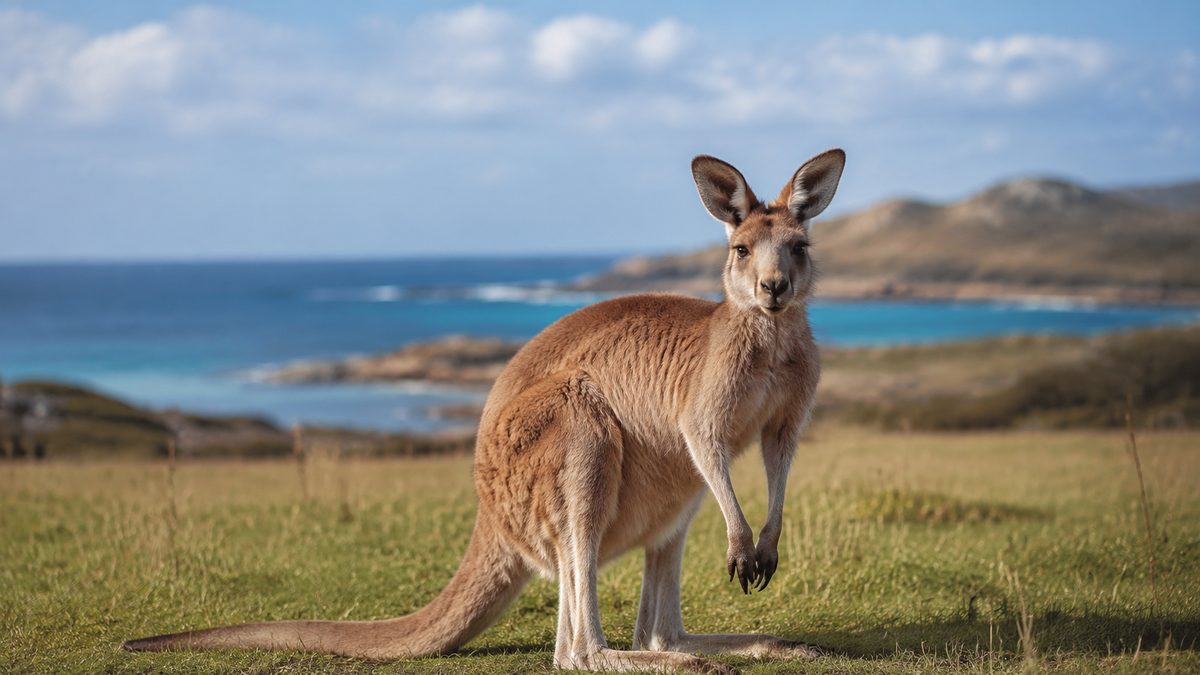
The kangaroo. No other animal says Australia the way a kangaroo does. There are around 50 million kangaroos in Australia, which is more than double the human population. Four species make up the main group: the red kangaroo, eastern grey, western grey, and antilopine kangaroo.
What I find most interesting is the biology. A female kangaroo can have three young at different stages of development at the same time. One joey outside the pouch, one inside, and one embryo in a state of suspended development called embryonic diapause. The mother can pause a pregnancy if conditions are bad, then resume it when food and water return. No other mammal group does this at the same scale.
Red kangaroos are the largest marsupials on Earth. Males can reach 90kg and cover 9 metres in a single bound. Their top speed is around 70km/h.
Is the Platypus Found Only in Australia?
Yes. The platypus lives only in eastern Australia and Tasmania. It is one of only five surviving monotremes in the world, meaning mammals that lay eggs instead of giving birth to live young. The other four are echidna species.
When British scientists first saw a platypus specimen in 1799, they thought it was a hoax. A mammal with a duck bill, beaver tail, otter feet, and the ability to lay eggs seemed impossible. George Shaw, the naturalist who examined it, reportedly tried to find the stitches where someone had sewn a duck bill onto a mammal body.
What I find remarkable is the electroreception. The platypus hunts underwater with its eyes closed. It detects the electric fields produced by the muscle movements of its prey using around 40,000 electroreceptors in its bill. No other mammal hunts this way.
Male platypuses also have venomous spurs on their hind legs. The venom causes severe pain in humans and can kill small animals. A venomous, egg-laying, electrically-sensing mammal. Australia.
Why Does Australia Have So Many Unique Animals?
The answer is plate tectonics and time. Around 180 million years ago, Australia was part of the supercontinent Gondwana, connected to Antarctica, South America, Africa, and India. As Gondwana broke apart, Australia drifted north and became fully isolated from other landmasses around 45 million years ago.
That isolation meant Australian animals evolved without competition from the placental mammals that came to dominate every other continent. Placental mammals, the group that includes dogs, cats, horses, elephants, and humans, give birth to well-developed young. Marsupials, which carry underdeveloped young in pouches, were largely replaced by placentals everywhere else. In Australia, marsupials had no competition and filled every ecological niche.
In my experience studying Australian urban and natural history, what strikes me most is this: Australia did not just keep its old animals. It ran a completely separate evolutionary experiment for 45 million years. The results are animals that solve the same problems, finding food, avoiding predators, reproducing, in completely different ways to anything else on Earth.
The dry climate also played a role. Australia is the driest inhabited continent. Animals here evolved extreme water efficiency, heat tolerance, and the ability to survive on low-nutrition food sources like eucalyptus leaves.
Are Koalas Only Found in Australia?
Yes. Koalas are found only in Australia, living in eucalyptus forests along the eastern and southeastern coast. They are not bears. They are marsupials more closely related to wombats than to any bear species.
The koala diet is one of the most specialised in the animal kingdom. Eucalyptus leaves are toxic to most animals. They contain phenolic compounds and terpenes that would poison a human. Koalas have a specialised digestive system with an extremely long caecum, up to 2 metres, that detoxifies these compounds.
What I found when looking at the research is that koalas also select specific eucalyptus species out of the 700 or so available. A koala in Queensland eats different species to one in Victoria. They learn preferences from their mothers. Each population has its own food culture, essentially.
Koalas sleep up to 22 hours a day. This is not laziness. Digesting toxic leaves requires enormous energy, and sleeping conserves what little nutrition they extract.
The IUCN listed koalas as endangered in 2022. Habitat loss, disease, and climate change are the main pressures. The wild population is estimated at around 100,000, down significantly from historical numbers.
What Unique Reptiles Are Found Only in Australia?
Australia has over 870 reptile species and around 93% of them are found nowhere else. This is the highest reptile endemism of any country on Earth.
Here are the standouts:
- Thorny devil - A small lizard covered in spines that channels water from any part of its body to its mouth through microscopic grooves between its scales. It can drink through its skin.
- Blue-tongued skink - Uses its bright blue tongue to startle predators. The contrast between the pink mouth and blue tongue mimics a warning signal.
- Frilled-neck lizard - Extends a large frill of skin around its neck when threatened, making itself look much larger. Found across northern Australia and southern New Guinea.
- Shingleback lizard - Has a tail shaped like its head to confuse predators about which end to attack. Pairs mate for life and return to the same partner each breeding season.
- Perentie - Australia's largest monitor lizard, reaching up to 2.5 metres. The fourth largest lizard species on Earth.
Australia also has more venomous snake species than any other continent. Of the 25 most venomous snakes in the world, 21 are Australian. The inland taipan has the most toxic venom of any land snake, with enough venom in a single bite to kill 100 adult humans.
Other Animals Found Only in Australia
The Quokka
The quokka lives mainly on Rottnest Island off the coast of Western Australia. It is a small wallaby, about the size of a domestic cat, and has become famous for appearing to smile in photos. When Dutch explorer Willem de Vlamingh arrived at Rottnest Island in 1696, he thought quokkas were giant rats and named the island Rotte nest, meaning rat nest.
What I find interesting is the quokka's metabolism. Like kangaroos, females can pause embryo development during drought. They also feed joeys a different milk composition as the joey ages, adjusting the nutritional content week by week.
The Wombat
Wombats are the only animals on Earth that produce cube-shaped faeces. They do this because their digestive tract has varying elasticity, which shapes the waste into cubes as it moves through. The cubes stack without rolling, which helps wombats mark territory on rocks and logs.
Common wombats can run at 40km/h and have a cartilaginous plate in their rump. When a predator chases a wombat into its burrow, the wombat blocks the entrance with its rump and can crush a predator's skull against the burrow roof.
The Numbat
The numbat is one of Australia's rarest marsupials. It eats only termites, consuming around 20,000 per day. Unlike most marsupials, it is active during the day. The wild population is estimated at fewer than 1,000 individuals, making it critically endangered.
The Cassowary
The southern cassowary lives in the rainforests of far north Queensland. It is the third tallest and second heaviest bird on Earth, reaching 1.8 metres and 85kg. It cannot fly but can run at 50km/h and swim. Its inner toe has a dagger-like claw up to 12cm long.
Cassowaries are essential to rainforest ecology. They eat large fruits and disperse seeds across wide areas. Some rainforest trees depend almost entirely on cassowaries for seed dispersal.
The Sugar Glider
Sugar gliders are small possums with a membrane of skin stretching from wrist to ankle. They glide between trees, covering up to 50 metres in a single glide. They are highly social, living in groups of up to 10 adults that share nests and groom each other.
FAQ
Which animal is found only in Australia and nowhere else in the world?
Many animals fit this description. The most well-known are the kangaroo, koala, platypus, echidna, wombat, quokka, Tasmanian devil, and numbat. Australia has over 300 unique mammal species alone.
What is the rarest animal found only in Australia?
The Gilbert's potoroo is considered the world's rarest marsupial. Fewer than 100 individuals survive in a small area near Albany in Western Australia. It was thought extinct for over 100 years before rediscovery in 1994.
Are there animals in Australia that can kill you?
Yes. Australia has the most venomous snakes of any continent, the world's most venomous spider (Sydney funnel-web), box jellyfish, saltwater crocodiles, and the blue-ringed octopus, which carries enough venom to kill 26 adults. That said, actual deaths from wildlife in Australia are rare. Horses and bees kill more Australians per year than snakes or spiders.
Why did marsupials survive in Australia but not elsewhere?
Marsupials were once widespread across the world. When placental mammals evolved and spread, they outcompeted marsupials almost everywhere. Australia's isolation meant placental mammals, apart from bats and rodents that arrived later, never reached the continent. Marsupials had 45 million years to diversify without that competition.
Do any Australian animals live in other countries?
A few species have ranges that extend into New Guinea, including the tree kangaroo, cassowary, and some wallaby species. But the vast majority of Australia's unique animals, especially the iconic ones, are found nowhere else.
The Bottom Line
Australia's unique animals are the product of deep time and geographic isolation. The which animal is found only in Australia question has hundreds of correct answers, from the egg-laying platypus to the cube-poop wombat to the venomous kangaroo-adjacent echidna.
What I keep coming back to is this: every other continent had its evolutionary experiment interrupted by land bridges, ice ages, and the spread of placental mammals. Australia ran its experiment uninterrupted for 45 million years. The result is a continent full of animals that look like they came from a different planet, because in evolutionary terms, they did.