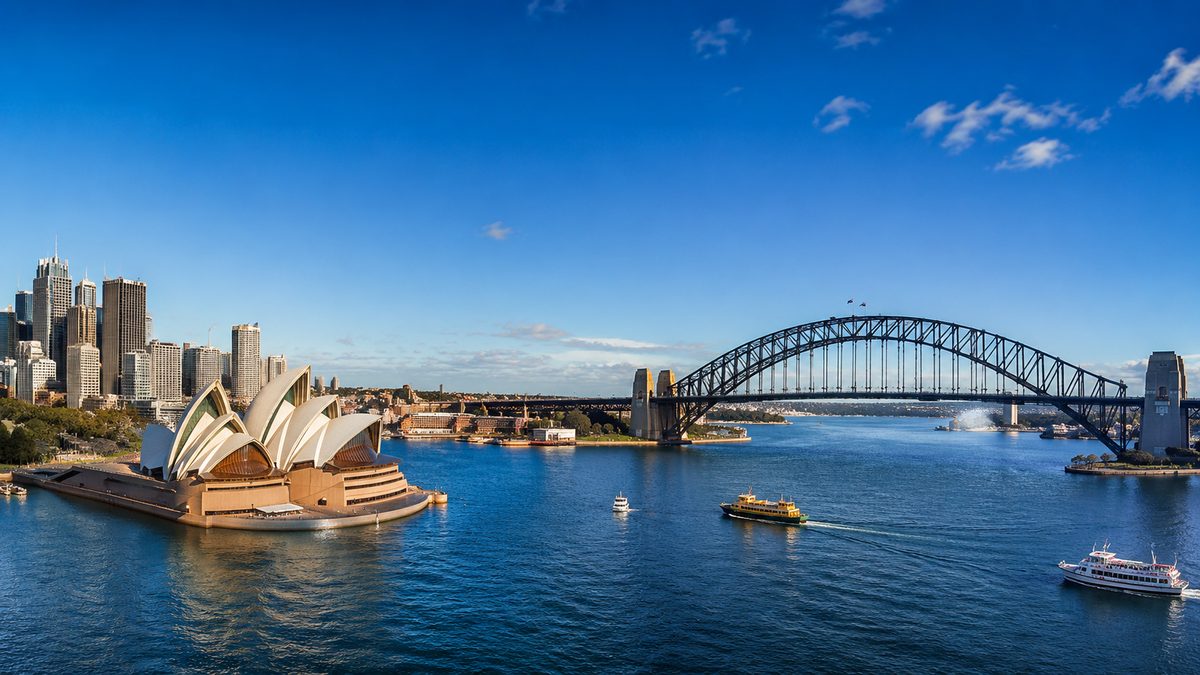
Sydney, Melbourne and Brisbane. Those are the top 3 cities in Australia by population, economic output and global recognition. The order matters and the reasons behind it are more interesting than most people expect.
I have spent years studying how Australian cities grew, why they grew where they did, and what actually makes one city outrank another. The answer is not just about size. It is about infrastructure, migration patterns, economic gravity and the decisions made by planners and governments over 200 years.
Here is what the data shows and what it actually means.
What Is the Largest City in Australia?
Sydney is the largest city in Australia. As of 2024, Sydney has a population of approximately 5.3 million people, making it the most populated urban area in the country.
Sydney grew first because it was the first. The British established the colony at Port Jackson in 1788 and the city never stopped accumulating people, capital and institutions. First mover advantage in urban development is real and Sydney has held it for over 200 years.
Key facts about Sydney:
- Population: approximately 5.3 million (2024)
- Australia's financial capital and home to the ASX
- Largest international airport by passenger volume
- Home to the most Fortune 500 regional headquarters in Australia
What I found when looking at Sydney's growth data is that it consistently attracts the highest share of skilled migrants. The Department of Home Affairs data shows Sydney receives around 30 percent of Australia's permanent migration intake each year. People follow jobs and jobs follow people. That cycle has compounded for decades.
Is Sydney or Melbourne the Most Populated City in Australia?
Sydney is currently more populated than Melbourne, but the gap is closing fast.
Melbourne's population sat at approximately 5.1 million in 2024. Before COVID, Melbourne was on track to overtake Sydney by 2030. The pandemic slowed Melbourne's growth more than Sydney's because Melbourne had two of the longest lockdowns of any city in the world. That set the trajectory back by roughly three to five years.
The Australian Bureau of Statistics projects Melbourne will surpass Sydney in population sometime between 2030 and 2035 if current growth rates hold.
Why does Melbourne keep growing so fast? Three reasons:
- Lower median house prices than Sydney, which attracts young families and interstate migrants
- Strong university sector pulling in international students who then stay
- A manufacturing and services economy that diversified earlier than other cities
In my experience looking at Melbourne's urban history, the city has always punched above its weight relative to its population. The cultural infrastructure, the tram network, the density of inner suburbs, these were built when Melbourne was the richest city in the world during the 1880s gold rush era. That foundation still shapes how the city functions today.
What Are the Top 3 Cities in Australia by Population?
Here are the top 3 cities in Australia by population as of 2024:
| Rank | City | Population (approx.) | State |
|---|---|---|---|
| 1 | Sydney | 5.3 million | New South Wales |
| 2 | Melbourne | 5.1 million | Victoria |
| 3 | Brisbane | 2.6 million | Queensland |
After Brisbane, the next largest cities are Perth at around 2.2 million and Adelaide at around 1.4 million. The gap between Brisbane and Perth is significant but smaller than it was ten years ago. Perth grew sharply during the mining boom and has held much of that population.
What the numbers do not show is density. Sydney and Melbourne are far denser than Brisbane. Brisbane sprawls. The greater Brisbane area covers a massive footprint compared to its population, which shapes everything from commute times to infrastructure costs to how the city feels to live in.
Why Is Brisbane Considered One of Australia's Top Cities?
Brisbane earns its place in the top 3 through population size, economic growth and the 2032 Olympic Games, which will accelerate infrastructure investment by an estimated 17 billion dollars over the next decade.
What I saw when looking at Brisbane's growth data from 2016 to 2023 is that it had the fastest population growth rate of any major Australian city. The ABS recorded net interstate migration into Queensland at record levels during 2020 to 2022, driven by people leaving Sydney and Melbourne during the pandemic for lower costs and warmer weather.
Brisbane's economy is built on:
- Resources and energy sector services
- Education, with three major universities in the metro area
- Tourism and hospitality
- A growing technology and startup sector concentrated in Fortitude Valley and South Brisbane
The 2032 Olympics will do for Brisbane what the 2000 Games did for Sydney. It forces infrastructure decisions that would otherwise take 30 years of political debate. New rail lines, stadium upgrades, athlete villages that convert to housing, these projects reshape a city's trajectory.
Brisbane is also the youngest of the three cities in terms of median resident age. The median age in Brisbane is around 35, compared to 37 in Sydney and Melbourne. Younger populations drive different economic activity, different housing demand and different political priorities.
What Is the Capital City of Australia?
Canberra is the capital city of Australia. It is not Sydney. It is not Melbourne.
This surprises a lot of people internationally. Canberra was purpose-built as a compromise between Sydney and Melbourne, both of which wanted to be the national capital when the Australian colonies federated in 1901. The solution was to build a new city roughly halfway between them in the Australian Capital Territory.
Canberra's population is around 470,000. It is home to Parliament House, the High Court, the Reserve Bank of Australia and most federal government departments. It functions as a government and public service city more than a commercial or cultural one.
What this means practically is that Australia's political capital and its economic capitals are in different places. Sydney drives finance. Melbourne drives culture and manufacturing. Canberra drives policy. Brisbane, Perth and Adelaide each anchor their own regional economies. This geographic spread of function is unusual compared to countries like the UK or France where one city dominates everything.
Which Australian City Has the Best Quality of Life?
Melbourne consistently ranks highest for quality of life among Australian cities and regularly appears in the top 10 of global liveability indexes.
The Economist Intelligence Unit's Global Liveability Index ranked Melbourne in the top 5 cities in the world multiple times between 2011 and 2019. It dropped during COVID due to the lockdowns but has recovered strongly in recent rankings.
What drives Melbourne's liveability scores:
- Public transport coverage, the tram network alone covers 250 kilometres of track and is the largest operating tram network in the world outside of Europe
- Healthcare access, with major hospitals and medical research institutions concentrated in the inner city
- Education, Melbourne has more universities per capita than any other Australian city
- Cultural infrastructure, more live music venues, galleries, restaurants and sporting events than comparable cities
- Green space, the city has significant parkland within 5 kilometres of the CBD
Sydney scores well on liveability too but loses points on housing affordability and commute times. The median house price in Sydney is consistently 15 to 20 percent higher than Melbourne, and Sydney's road and rail network is under more strain relative to its population density.
Brisbane scores well on climate and outdoor lifestyle but still lags on cultural infrastructure and public transport compared to the two larger cities. That gap will narrow as Olympic investment flows in.
When I tried to find a single metric that predicted liveability rankings most reliably, public transport quality came up repeatedly across multiple independent studies. Cities where people can move without a car score higher on almost every wellbeing measure. Melbourne's tram and train network is a direct reason it outperforms cities of similar size globally.
FAQ
What are the top 3 cities in Australia?
Sydney, Melbourne and Brisbane. Ranked by population, economic output and infrastructure scale.
Will Melbourne overtake Sydney in population?
Yes, projections from the ABS suggest Melbourne will surpass Sydney in population between 2030 and 2035 based on current growth rates.
Is Canberra bigger than Brisbane?
No. Canberra has around 470,000 people. Brisbane has around 2.6 million. Canberra is the capital but it is not one of the largest cities by population.
Why is Sydney the financial capital if Canberra is the political capital?
Australia's financial sector concentrated in Sydney before federation in 1901. The stock exchange, major banks and corporate headquarters were already established there. Political decisions moved to Canberra but economic gravity stayed in Sydney.
Which city should I visit if I only have time for one?
Melbourne for culture, food and urban experience. Sydney for harbour, beaches and iconic landmarks. Brisbane for outdoor lifestyle and a faster-paced emerging city feel. All three are within a two-hour flight of each other.
How does Perth compare to the top 3 cities?
Perth is the fourth largest city at around 2.2 million people. It is geographically isolated, closer to Singapore than to Sydney, and its economy is heavily tied to mining and resources. It ranks well on liveability but operates more independently from the eastern seaboard cities than Brisbane does.
The Bottom Line
Sydney leads on population and finance. Melbourne leads on liveability and is closing the population gap fast. Brisbane is the growth story of the next decade with Olympic investment accelerating what was already a strong trajectory.
What the top 3 cities in Australia share is that they all sit on the eastern seaboard, all have major international airports, and all function as anchor points for their regional economies. The rest of Australia's cities are significant but these three set the national agenda on housing, migration, infrastructure and economic policy.
Understanding how these cities work, how they grew and where they are heading, matters whether you live in one of them or you are trying to understand Australia from the outside.