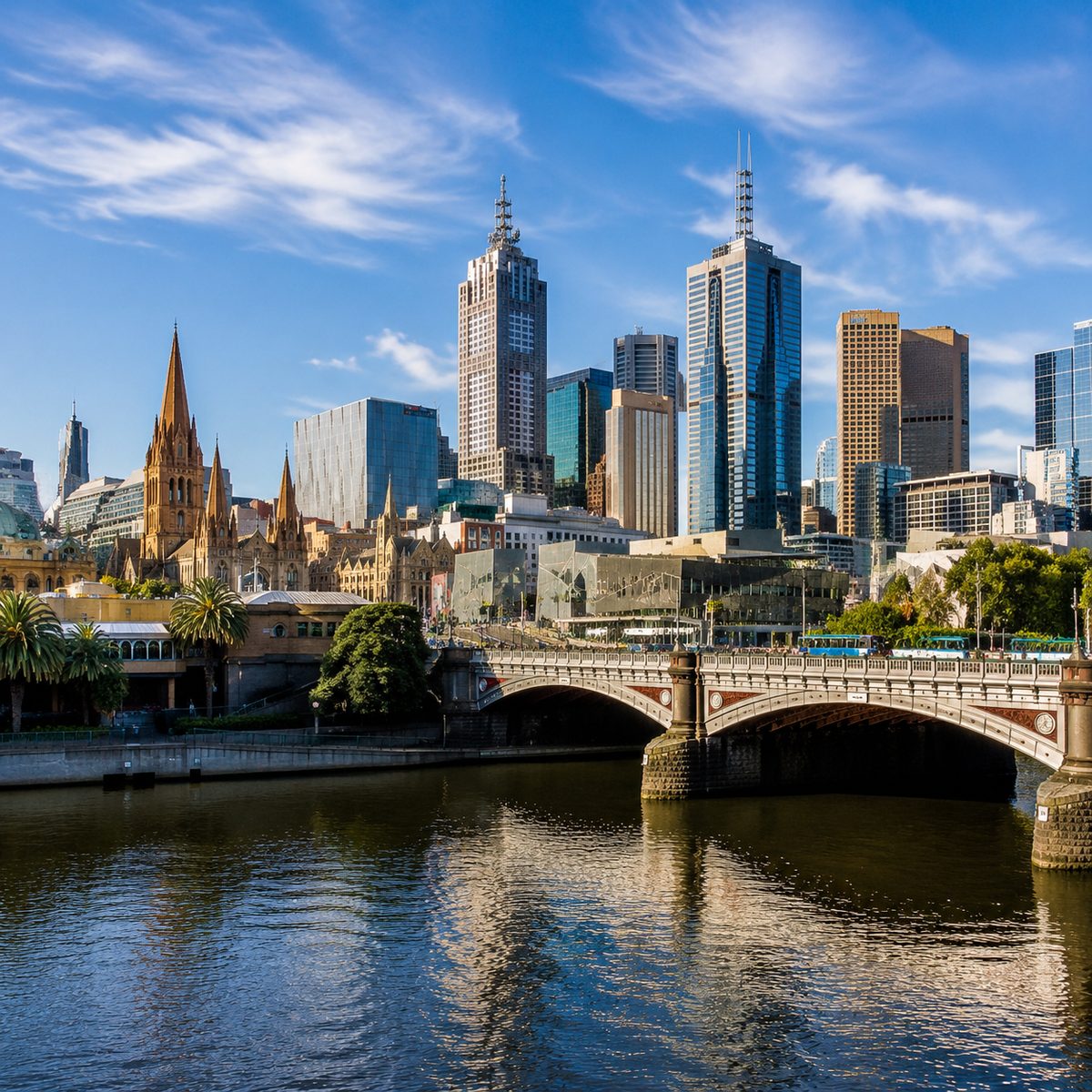
Melbourne is widely considered the best city in Australia, backed by decades of global liveability rankings, a dense public transport network, and a cultural life that no other Australian city comes close to matching.
But that one sentence only scratches the surface. Australia has five major cities, each with genuine strengths. The real question is what you mean by best. Best for whom? Best for what kind of life?
Let's work through it properly.
The Big Picture First
Australia is one of the most urbanised countries on earth. Around 90 percent of Australians live in cities. That concentration of people, money, and ambition has produced a handful of genuinely world-class urban centres.
Sydney is the global face of Australia. Brisbane is booming. Perth is vast and sun-drenched. Adelaide is liveable and underrated. And Melbourne sits at the centre of a long-running argument about which city does it best.
That argument is not just pub talk. It shows up in migration data, in housing markets, in where universities rank, and in where major events choose to land. The stakes are real.
For most of the past two decades, Melbourne has come out on top in the Economist Intelligence Unit's Global Liveability Index. It held the number one spot for seven consecutive years. That is not a coincidence. It reflects something structural about how the city is built and how it functions.
What Makes a City the Best?
Liveability rankings measure specific things. Stability. Healthcare. Culture and environment. Education. Infrastructure. These are not soft impressions. They are scored categories with data behind them.
Melbourne scores consistently well across all five. Its public hospital system is strong. Its universities, led by the University of Melbourne, sit in the global top 50. Its arts and music scene is genuinely world-class, not just by Australian standards.
And then there is the transport network. Metlink Melbourne runs one of the most extensive urban public transport systems in the Southern Hemisphere. Trains, trams, and buses connect the inner city to suburbs that stretch 50 kilometres in every direction. The tram network alone is the largest outside Europe. That kind of infrastructure shapes daily life in ways that are hard to overstate.
When you can move around a city easily, affordably, and without a car, the city opens up. You access more jobs. You reach more culture. You spend less time stuck in traffic and more time living.
Is Sydney or Melbourne the Best City in Australia?
This is the question Australians have been arguing about since the 1850s. It is not going to be settled here. But the evidence leans one way.
Sydney is spectacular. The harbour is one of the great urban landscapes on earth. The weather is better. The beaches are closer. For international visitors, Sydney is often the first and most vivid impression of Australia.
But Sydney is also extraordinarily expensive. The median house price has pushed well past a million dollars. Commutes are long. The public transport system, while improving, has historically lagged behind Melbourne's in coverage and frequency.
Melbourne's housing costs have risen sharply too. But the city's grid layout, its tram network, and its concentration of inner-city neighbourhoods mean that more people can live close to where they work and play without needing to own a car.
For quality of daily life, Melbourne edges ahead. For drama and spectacle, Sydney wins. It depends what you are optimising for.
Which Australian City Has the Best Quality of Life?
Quality of life is not just about rankings. It is about what a Tuesday afternoon feels like. Can you walk to a good coffee? Is the park nearby? Can your kids get to school safely?
Melbourne performs well on all of these. Its café culture is not a cliché. It emerged from a specific history of Italian and Greek migration in the postwar decades that transformed the city's food culture from the ground up. The laneways of the CBD are a direct product of that history.
The city also has a strong sense of neighbourhood identity. Fitzroy, Collingwood, Brunswick, Richmond, St Kilda. Each suburb has its own character, its own strip of shops, its own community feel. That granularity of urban life is something Melbourne has cultivated deliberately over generations.
Adelaide deserves mention here. It is consistently ranked among the world's most liveable cities in its own right. It is less crowded, more affordable, and has a food and wine culture that punches well above its size. For families who do not need the scale of Melbourne or Sydney, Adelaide is a serious option.
What is the Most Popular City in Australia for Tourists?
Sydney receives more international tourists than any other Australian city. The Opera House and the Harbour Bridge are two of the most recognised structures on earth. For a first-time visitor to Australia, Sydney is the logical starting point.
But Melbourne draws tourists for different reasons. The food scene. The sport. The events calendar. The Australian Open, the Formula 1 Grand Prix, the AFL Grand Final. Melbourne has built itself into a global events city, and that draws visitors who are looking for something more than a postcard.
The Great Ocean Road starts near Melbourne. The Yarra Valley wine region is an hour away. The Mornington Peninsula is closer still. Melbourne works as a base for exploring a remarkably varied region.
For domestic tourists, Melbourne and Sydney are roughly equal in popularity. But Melbourne's events calendar gives it a consistent draw across the whole year rather than clustering in summer.
Which Australian City is Best for Families?
Families need different things from a city. Good schools. Safe streets. Parks and open space. Affordable housing with enough room. Access to healthcare. A sense that the city is built for people, not just for commerce.
Melbourne scores well here. The state school system in Victoria is strong. The city has an enormous amount of parkland, including the Royal Botanic Gardens, Princes Park, and the Dandenong Ranges on the eastern fringe. The public transport network means teenagers can move around independently without parents needing to drive them everywhere.
The outer suburbs of Melbourne have grown rapidly and some lack the infrastructure that inner suburbs take for granted. That is a real issue. But the city's planning frameworks have been working to address it, with new train lines and town centres being developed in growth corridors.
Brisbane is also worth considering for families. The climate is warmer. Housing is more affordable than Melbourne or Sydney. The city is investing heavily in infrastructure ahead of the 2032 Olympics. For families who prioritise outdoor living and space, Brisbane has a strong case.
What is the Fastest-Growing City in Australia?
Brisbane and South East Queensland are growing faster than any other major urban region in Australia right now. The population shift from Sydney and Melbourne to Queensland accelerated during the pandemic and has not fully reversed.
Melbourne was the fastest-growing major city in the world for several years before the pandemic, adding more than 100,000 people annually. That growth has moderated but remains strong. The city's population is projected to overtake Sydney's within the next two decades.
Perth is also growing quickly, driven by the resources sector and a wave of interstate migration. It remains geographically isolated but that isolation has become less of a barrier as remote work has normalised.
Growth brings pressure. Housing costs, congestion, and demand for services all increase with population. The cities that manage growth well, that invest in transport and schools and open space ahead of demand rather than behind it, are the ones that maintain liveability as they expand.
Melbourne's investment in its public transport network through Metlink is part of that story. The Metro Tunnel project, the Suburban Rail Loop, the ongoing expansion of bus and tram services. These are not just infrastructure projects. They are decisions about what kind of city Melbourne wants to be as it grows.
What is Considered the Best City to Live in Australia?
For most people, most of the time, Melbourne is the answer. It combines the scale and opportunity of a major global city with a quality of daily life that smaller cities offer but larger ones often sacrifice.
The café on the corner. The tram that comes every eight minutes. The football game on a Saturday afternoon. The gallery that is free to enter. The park that is five minutes walk away. These are not small things. They are the texture of a life.
Melbourne was not always this way. In the 1970s and 1980s it was a city in decline, losing population and confidence to Sydney. The revival that followed was deliberate. It came from investment in culture, in public space, in transport, and in the kind of urban density that makes neighbourhoods feel alive.
That history matters. Cities do not become great by accident. They become great through sustained decisions about what to prioritise and what to protect.
Melbourne has made those decisions well, more often than not. That is why it keeps coming out on top.
Frequently Asked Questions
What is considered the best city in Australia?
Melbourne is widely considered the best city in Australia based on global liveability rankings, public transport coverage, cultural infrastructure, and quality of daily life.
What is considered the best city to live in Australia?
Melbourne is consistently rated the best city to live in Australia for its combination of urban scale, neighbourhood character, and public transport access.
Which Australian city has the best quality of life?
Melbourne ranks highest for quality of life among Australian cities, with Adelaide a strong second for those who prefer a smaller, more affordable urban environment.
Is Sydney or Melbourne the best city in Australia?
Melbourne edges ahead of Sydney for daily liveability and transport, while Sydney leads for natural spectacle and international tourism appeal.
What is the most popular city in Australia for tourists?
Sydney receives the most international tourists, but Melbourne draws visitors year-round through its events calendar, food scene, and access to regional attractions.
Which Australian city is best for families?
Melbourne offers strong schools, extensive parkland, and an independent public transport network that works well for families across most of its suburbs.
What is the fastest-growing city in Australia?
Brisbane and South East Queensland are currently growing fastest, though Melbourne's long-term population trajectory is projected to surpass Sydney within two decades.