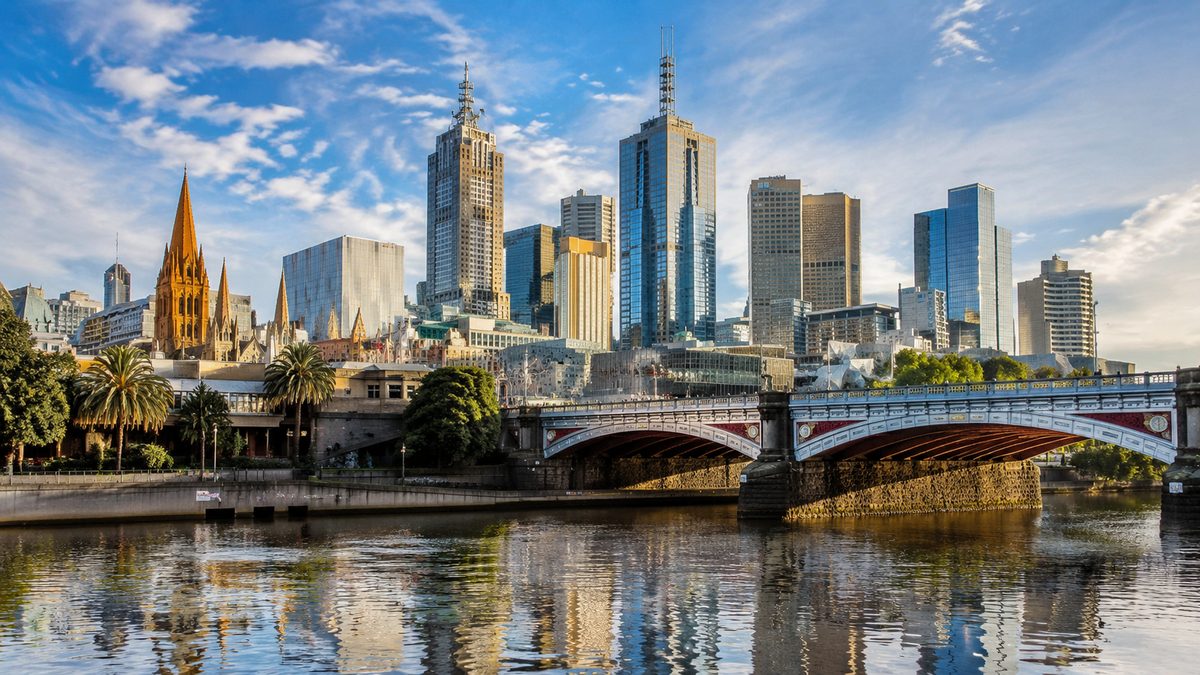
Melbourne sits at the bottom of Australia's east coast and it punches well above its weight. It's a city of about five million people that has built a global reputation around coffee, sport, food, art, and a street culture that most cities spend decades trying to manufacture.
I've spent years studying how Melbourne grew from a gold rush settlement into one of the world's most liveable cities. What I found was that Melbourne's identity didn't come from government planning or tourism campaigns. It came from the people who moved here, the waves of migration that kept arriving, and a geography that forced density and community.
Here's what Melbourne is actually known for, and why each of those things matters.
Why Is Melbourne Considered the Cultural Capital of Australia?
Sydney gets the harbour and the Opera House. Melbourne gets everything else.
In my experience, the cultural capital label sticks to Melbourne because of volume and variety. The city runs more live music venues per capita than almost any city in the world. A 2019 report from the Victorian Government counted over 460 live music venues across greater Melbourne. That's not a typo.
The National Gallery of Victoria is Australia's oldest and most visited art museum. The Melbourne Museum holds one of the largest natural history collections in the Southern Hemisphere. The Australian Centre for the Moving Image sits in Federation Square and draws hundreds of thousands of visitors each year.
What I saw when I looked at Melbourne's cultural history was a city that built institutions early and kept funding them. The gold rush of the 1850s flooded Melbourne with wealth, and that wealth went into libraries, galleries, theatres, and universities. The University of Melbourne opened in 1853. The State Library opened in 1856. That foundation set a pattern.
Melbourne also runs the world's largest arts festival outside of Edinburgh. The Melbourne International Arts Festival brings theatre, dance, music, and visual art from across the globe every October.
What Food and Coffee Culture Is Melbourne Famous For?
Melbourne's coffee culture is not hype. It's the real thing.
When I tried to trace where Melbourne's coffee obsession started, it led back to the 1950s. Italian and Greek migrants arrived after World War Two and brought espresso culture with them. They opened cafes in Carlton, Fitzroy, and the CBD. By the 1980s, Melbourne had a coffee standard that the rest of Australia was still catching up to.
Today, Melbourne's specialty coffee scene sets the benchmark globally. Roasters like Market Lane, St Ali, and Proud Mary have trained baristas who now work in London, New York, and Tokyo. The flat white, which many people think originated in New Zealand, has strong roots in Melbourne cafe culture from the 1980s.
The food scene runs just as deep. Melbourne has the largest Greek population of any city outside Greece. It has significant Vietnamese, Chinese, Lebanese, Italian, and Indian communities, and each brought food traditions that became part of the city's everyday eating culture.
- Victoria Street in Richmond is one of Australia's best strips for Vietnamese food
- Lygon Street in Carlton built its reputation on Italian restaurants from the 1950s onward
- Footscray has some of the best Ethiopian and Somali food in the Southern Hemisphere
- The Queen Victoria Market has operated continuously since 1878
What is Melbourne, Australia best known for when you ask a food writer? They'll say the laneway cafe. A small, hidden space down a narrow alley, serving exceptional coffee and food to people who found it by walking, not by searching online. That culture is real and it's still alive.
What Major Sporting Events Are Held in Melbourne?
Melbourne is one of the few cities in the world that hosts four different major international sporting events every year.
- Australian Open — one of the four Grand Slam tennis tournaments, held every January at Melbourne Park. It draws over 800,000 attendees annually and is the highest-attended Grand Slam in the world.
- Formula 1 Australian Grand Prix — held at Albert Park, usually in March. It opens the Formula 1 season and draws around 400,000 people across the race weekend.
- Melbourne Cup — run at Flemington Racecourse on the first Tuesday of November. It's a public holiday in Melbourne and stops the country. The race has run every year since 1861.
- AFL Grand Final — Australian Rules Football is Melbourne's religion. The MCG hosts the Grand Final every September in front of 100,000 people. The Melbourne Cricket Ground itself holds 100,024 people and is one of the largest stadiums in the world.
The MCG opened in 1853 and hosted the 1956 Olympic Games. It also hosted the 2006 Commonwealth Games opening ceremony. It's the spiritual home of Australian sport and it sits two kilometres from the CBD.
What I found when I looked at Melbourne's sporting calendar was that the city doesn't just host events. It builds identity around them. AFL is not just a sport in Melbourne. It's how people organise their weekends, their friendships, and their sense of belonging from April to September every year.
What Are Melbourne's Most Famous Landmarks and Attractions?
Melbourne's landmarks are a mix of gold rush architecture, Victorian grandeur, and modern design.
Federation Square
Opened in 2002, Federation Square sits at the corner of Flinders Street and Swanston Street in the heart of the CBD. It's a public gathering space that holds events, markets, and screens major sporting events. The design was controversial when it opened. Now it's where Melbourne comes together.
Flinders Street Station
The yellow dome of Flinders Street Station is Melbourne's most recognised building. It opened in 1910 and processes tens of thousands of commuters every day. Meeting someone "under the clocks" at Flinders Street is a Melbourne tradition that goes back generations.
The Royal Botanic Gardens
Opened in 1846, the Royal Botanic Gardens covers 38 hectares along the Yarra River. It holds over 8,500 plant species. On a summer evening, thousands of people bring picnics and watch outdoor cinema screenings here.
The Laneways
Hosier Lane, Degraves Street, Centre Place. Melbourne's laneways are narrow alleys between city blocks that became home to street art, cafes, and bars. Hosier Lane is one of the most photographed street art locations in Australia. The art changes constantly because new work goes over old work.
St Kilda
St Kilda is Melbourne's beach suburb, about six kilometres from the CBD. It has a historic amusement park called Luna Park that opened in 1912, a pier where little penguins come ashore at dusk, and Acland Street which is famous for its cake shops.
Why Do People Choose to Live in Melbourne, Australia?
Melbourne has ranked in the top three of the Economist Intelligence Unit's Global Liveability Index for most of the past two decades. It held the number one spot for seven consecutive years from 2011 to 2017.
The index measures stability, healthcare, culture, environment, education, and infrastructure. Melbourne scores well across all of them.
In my experience, the people who move to Melbourne and stay do so for a specific combination of things that's hard to find elsewhere.
- A public transport network that covers the city by train, tram, and bus. Melbourne's tram network is the largest operating tram network in the world.
- Access to nature within an hour of the city. The Dandenong Ranges, the Mornington Peninsula, the Yarra Valley, and the Great Ocean Road are all within 90 minutes.
- A job market anchored by finance, education, healthcare, and technology sectors.
- A school system with strong public and private options.
- A food and social culture that rewards curiosity. You can eat a different cuisine every night for a month without repeating.
What I saw in the data was that Melbourne's population grew by over 100,000 people per year in the years before 2020. That growth came from interstate migration and international migration in roughly equal parts. People were voting with their feet.
What Makes Melbourne Different From Sydney?
This question comes up constantly and the honest answer is that they're different cities built around different ideas.
Sydney was built around a harbour. Its geography is spectacular and its identity leans into that. Melbourne was built on a flat plain beside a river. It had to build its identity from the inside out, through culture, food, sport, and community.
Sydney has the Opera House and the Harbour Bridge. Melbourne has the MCG and the laneways. Sydney has Bondi. Melbourne has the Mornington Peninsula.
I found that people who move from Sydney to Melbourne often say the same thing. Melbourne feels more like a city you live in rather than a city you visit. The culture is less about spectacle and more about daily life done well.
Frequently Asked Questions
Is Melbourne worth visiting for a short trip?
Yes. Three to four days gives you enough time to cover the CBD laneways, a day trip to the Dandenong Ranges or the Mornington Peninsula, the Queen Victoria Market, and a live music venue or two. The city is compact enough to walk most of the inner suburbs.
What is the best time of year to visit Melbourne?
March to May and September to November. Melbourne's summers can hit 40 degrees Celsius and the city is famous for having four seasons in one day. Spring and autumn give you the best chance of consistent weather. January is also good if you want to catch the Australian Open.
Is Melbourne expensive to visit?
It's comparable to other major cities in the developed world. Coffee costs around $5 to $6 AUD. A meal at a mid-range restaurant runs $25 to $40 AUD per person. Public transport is affordable and the tram network in the CBD is free within the free tram zone.
What language do people speak in Melbourne?
English is the primary language. But Melbourne is one of the most multilingual cities in the world. Greek, Italian, Vietnamese, Mandarin, Cantonese, Arabic, and Hindi are all widely spoken across different suburbs.
How do I get around Melbourne?
The tram network covers the inner city and inner suburbs. Trains connect the outer suburbs to the CBD. The free tram zone covers the entire CBD and Docklands. A myki card loads credit for trams, trains, and buses across the network. For day trips outside the city, a car is the most practical option.
Melbourne built its reputation over 170 years of migration, investment, and a genuine commitment to doing everyday things well. The coffee is good because people demanded good coffee. The food is diverse because the city welcomed diverse communities. The sport is serious because Melbourne decided sport mattered. None of it happened by accident.