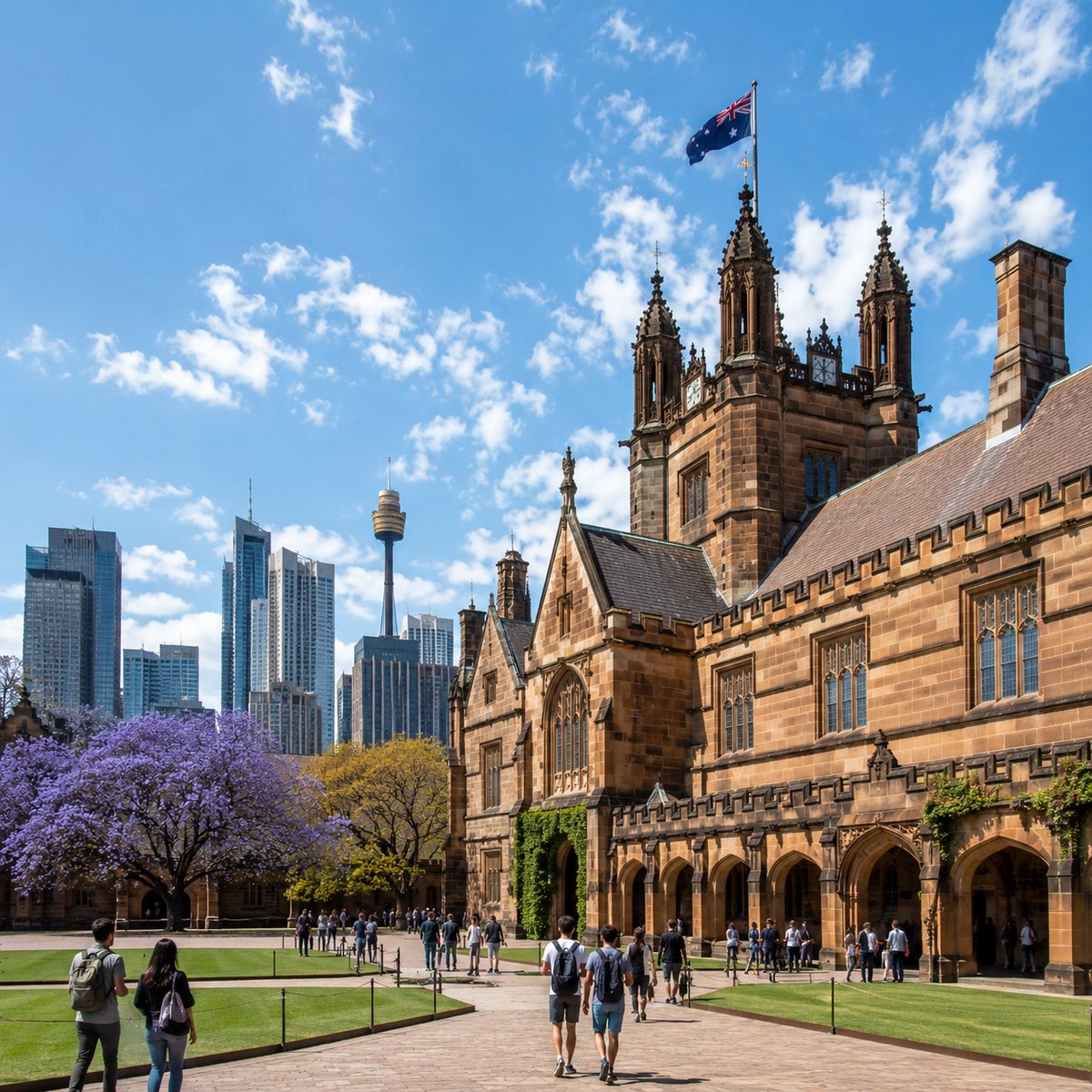
The ACT is the most educated state in Australia, with over 50% of its adult population holding a bachelor degree or higher.
Australia is a big country with a lot of space between its cities. But when it comes to education, the gaps between states are just as wide as the geography. Some places punch well above their weight. Others lag behind in ways that matter for jobs, wages, and quality of life.
Education shapes everything. It shapes where people live, what work they do, and how cities grow. Melbourne knows this better than most. It has built its identity around universities, culture, and knowledge work. But how does Victoria stack up against the rest of the country? And who actually comes out on top?
Let's go state by state and find out.
The Big Picture First
Australia has around 26 million people. According to the Australian Bureau of Statistics, about 32% of Australians aged 25 to 34 hold a bachelor degree or higher. That number has been climbing steadily for decades. In 1981, fewer than 5% of Australians had a university degree. Today it is closer to one in three.
But that national average hides enormous differences between places. The ACT sits at one extreme. Remote parts of the Northern Territory sit at the other. Understanding why those gaps exist tells us a lot about how Australia works.
The ACT Stands Alone
The Australian Capital Territory is in a league of its own. More than 50% of ACT residents aged 15 and over hold a bachelor degree or above. No other state or territory comes close to that number.
Why is this? The answer is simple once you think about it. Canberra is a purpose-built capital city. Its entire economy runs on government, policy, defence, and research. The Australian Public Service employs tens of thousands of people. Most of those jobs require degrees. The Australian National University sits at the heart of the city and draws researchers and academics from around the world.
When your city exists to run a country, you end up with a very educated population. It is not an accident. It is by design.
Victoria and New South Wales
After the ACT, Victoria and New South Wales trade blows for second place. Both sit around 35% to 38% of residents holding a bachelor degree or higher among working-age adults.
Melbourne drives Victoria's numbers. It is home to the University of Melbourne, Monash University, RMIT, Deakin, La Trobe, and Victoria University. That is a remarkable concentration of higher education in one city. Melbourne has positioned itself as a knowledge city since the 1980s. The shift away from manufacturing toward services and technology pulled educated workers in and kept them there.
Sydney does the same thing for New South Wales. The University of Sydney and UNSW are two of the country's most prestigious institutions. Sydney's finance and tech sectors attract degree holders from across Australia and overseas.
The competition between Melbourne and Sydney for educated workers is real. Both cities offer high wages, cultural life, and career opportunities. Melbourne tends to attract people in education, health, and the arts. Sydney pulls more strongly in finance and corporate services.
Queensland and South Australia
Queensland sits in the middle of the pack. Around 28% to 30% of working-age Queenslanders hold a university degree. Brisbane has grown fast and its university sector has grown with it. The University of Queensland is a genuine research powerhouse. But Queensland's economy still leans heavily on resources, tourism, and construction. Those industries do not require degrees the way knowledge industries do.
South Australia tells a similar story. Adelaide has strong universities, particularly the University of Adelaide and the University of South Australia. But the state's economy has struggled since the closure of the car manufacturing industry. Educated young people have a habit of leaving for Melbourne or Sydney. That brain drain keeps South Australia's overall education numbers lower than its universities might suggest.
Western Australia
Western Australia is interesting. Perth is a big, wealthy city. The University of Western Australia is well regarded. But the state's economy is dominated by mining and resources. Those industries pay extremely well without requiring degrees. A fly-in fly-out worker in the Pilbara can earn more than many university graduates.
This creates a situation where education rates are moderate but incomes are high. Around 28% of working-age West Australians hold a bachelor degree or higher. The resources boom has made higher education feel less necessary for many people. Why spend four years at university when you can earn six figures driving heavy machinery?
That logic makes sense at the individual level. At the state level, it creates a workforce that is heavily dependent on commodity prices.
Tasmania and the Northern Territory
Tasmania and the Northern Territory sit at the lower end of the education spectrum. Tasmania has around 22% to 24% of working-age adults with a bachelor degree or higher. The University of Tasmania is the only university in the state. Geographic isolation, a smaller economy, and lower average incomes all play a role.
The Northern Territory has the lowest education rates in the country. This reflects deep structural issues including the legacy of colonisation, geographic remoteness, and chronic underfunding of schools in remote communities. Darwin itself has reasonable education levels. But the Territory as a whole brings the average down significantly.
These are not just statistics. They represent real gaps in opportunity that have built up over generations.
Which Australian City Has the Most Educated Population?
Canberra wins this one easily. As the ACT's only major city, it carries all of that territory's remarkable education numbers. More than half of Canberra's adult population holds a university degree.
Among the major capital cities, Melbourne and Sydney are neck and neck. Melbourne has a slight edge in some measures, particularly among younger adults. The concentration of universities in Melbourne's inner suburbs, places like Carlton, Parkville, and Clayton, creates dense pockets of highly educated residents.
Melbourne's inner north and inner east consistently show some of the highest education rates of any urban area in Australia. Suburbs like Carlton, Fitzroy, Brunswick, and Hawthorn have long attracted academics, professionals, and students. This is not new. Melbourne has been building this identity for well over a century.
Why Does Any of This Matter?
Education rates are not just a point of civic pride. They shape economies in fundamental ways.
Cities and states with higher education levels tend to have more diverse economies. They are less vulnerable to the boom and bust cycles that hit resource-dependent regions hard. They attract investment in technology, health, and professional services. They generate more tax revenue per capita. They have lower unemployment rates during downturns.
Melbourne's transformation from a manufacturing city to a knowledge city over the past forty years is a case study in what education can do for an urban economy. The universities did not just train workers. They anchored research institutions, attracted international students, and created whole new industries around innovation and technology.
That transformation was not painless. Working-class suburbs lost jobs when factories closed. But the long-term trajectory has been toward a more educated, more economically resilient city.
The Gap Between Cities and Regional Areas
One of the most important education stories in Australia is not about which state leads. It is about the gap between capital cities and everywhere else.
In every state, capital cities have significantly higher education rates than regional and rural areas. This gap has been widening for decades. Young people from regional areas who go to university often do not come back. They settle in cities where the jobs are. This leaves regional communities with older, less educated populations and fewer economic opportunities.
This is a national challenge. It affects every state. Closing that gap requires investment in regional universities, better internet infrastructure, and economic development that creates graduate-level jobs outside capital cities.
What the Numbers Tell Us About Australia's Future
Australia's overall education levels have been rising for decades and will keep rising. The question is whether that rise will be shared evenly across states and regions.
The ACT will likely keep its lead. Its economy is built around government and research. That is not going to change. Victoria and New South Wales will continue to compete for second place. Both states are investing heavily in their university sectors and in attracting knowledge industries.
The bigger challenge is for Queensland, South Australia, Western Australia, Tasmania, and the Northern Territory. Each of those places needs to find ways to build knowledge economies that keep educated people at home rather than losing them to Melbourne and Sydney.
For Melbourne specifically, the education advantage is real and it matters. The city's universities are among its greatest assets. They attract students from across Australia and around the world. They generate research that drives innovation. They produce the graduates who fill the professional, health, and technology jobs that keep the city's economy growing.
Understanding where Australia stands on education, and where each state fits in that picture, helps explain why some cities thrive and others struggle. It is one of the most important stories in Australian urban history. And it is still being written.
Frequently Asked Questions
What is the most educated state in Australia?
The ACT is the most educated state in Australia, with over 50% of adults holding a bachelor degree or higher.
Which Australian state has the highest university graduation rate?
The ACT has the highest university graduation rate in Australia by a significant margin.
How does education level vary between Australian states and territories?
Education levels range from over 50% degree holders in the ACT down to around 20% in the Northern Territory, with Victoria and NSW in the middle at around 35% to 38%.
What percentage of Australians hold a university degree?
Around 32% of Australians aged 25 to 34 hold a bachelor degree or higher, according to the ABS.
Why does the ACT have such a high level of education compared to other states?
Canberra's economy is built entirely around government, policy, and research, which requires a highly educated workforce by design.
Which Australian city has the most educated population?
Canberra has the most educated population of any Australian city, followed closely by Melbourne and Sydney.