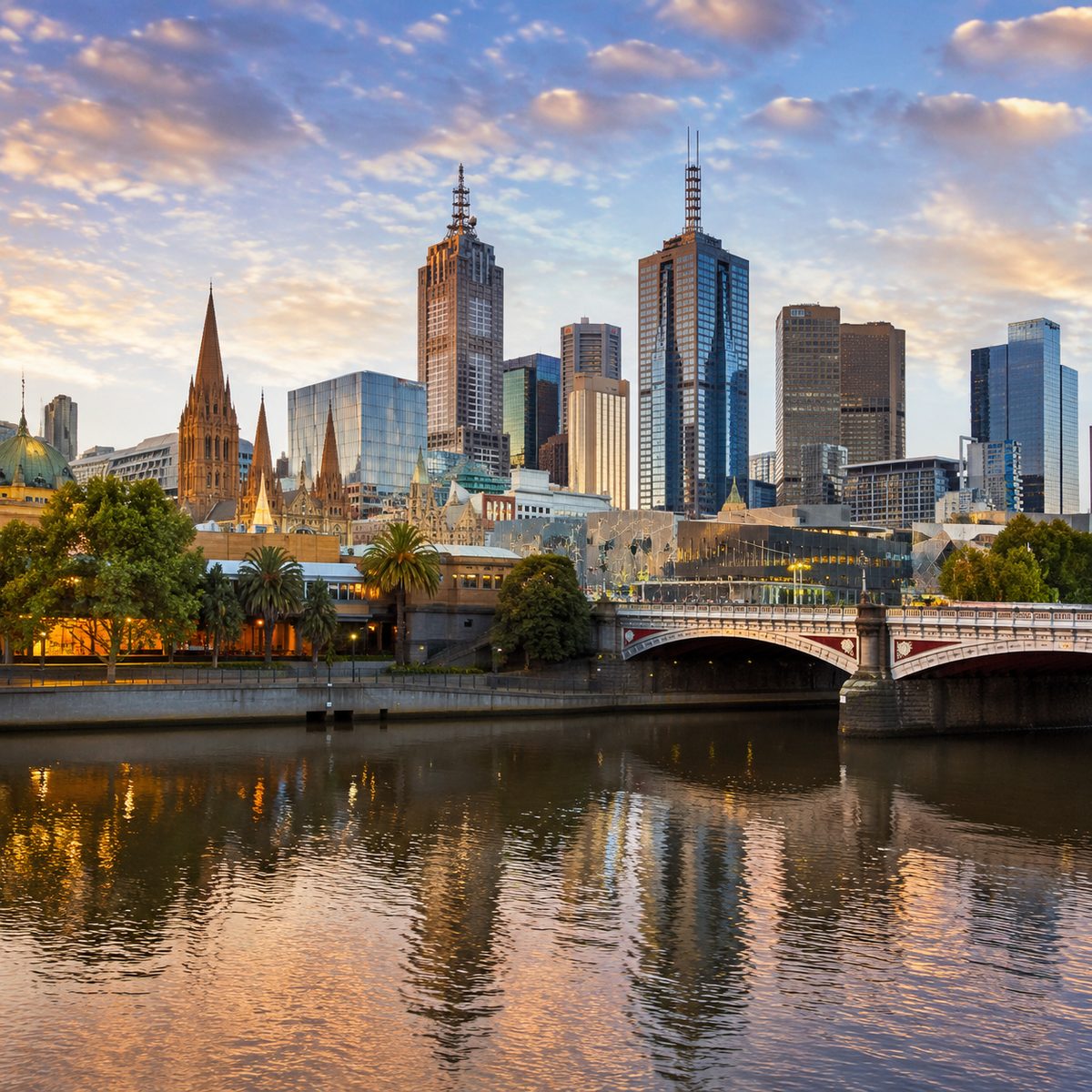
Melbourne is the prettiest city in Australia, and once you understand how the city was built, that answer stops being surprising.
Australia has no shortage of beautiful places. Beaches that stretch forever. Mountains that turn purple at dusk. Harbours that catch the light just right. But beauty in a city is a different thing. It is not just scenery. It is the way a place is put together. The streets, the buildings, the parks, the hidden corners. The feeling you get walking through it.
Melbourne gets that right in a way no other Australian city does.
Why City Beauty Is About More Than a Pretty View
Sydney has the harbour. Everyone knows that. The Opera House sits on the water like a postcard that never gets old. But a harbour view is one thing. A city you can actually walk through, explore, and feel connected to is something else entirely.
Beauty in a city is layered. It builds up over time. It comes from decisions made by planners, architects, gardeners, and ordinary people who cared about their streets. Melbourne had people like that from very early on.
The city was surveyed in 1837 by Robert Hoddle. He laid out a grid of wide streets and narrow lanes. That grid still shapes Melbourne today. The wide streets gave room for grand buildings. The lanes became something unexpected. They became the soul of the city.
The Laneways That Changed Everything
No other Australian city has anything like Melbourne's laneways. Hosier Lane. Degraves Street. Centre Place. AC/DC Lane. These are not just shortcuts between buildings. They are destinations.
The laneway culture grew slowly. In the 1990s, small cafes started opening in these narrow passages. Artists began painting the walls. The city did not fight it. It leaned in. Today the laneways are one of the most photographed urban spaces in the country.
Walk down Degraves Street on a weekday morning. The smell of coffee. The sound of cups and conversation. Wrought iron chairs on bluestone pavement. Buildings from the 1880s on either side. It feels like nowhere else in Australia. It barely feels like Australia at all, which is part of the point.
Melbourne built a European-style urban culture in the southern hemisphere. That took time and it took intention. The laneways are where you feel it most.
Architecture That Tells a Story
Which Australian city is best known for its architecture? Melbourne wins that conversation without much argument.
The gold rush of the 1850s flooded Victoria with money. Melbourne spent it on buildings. The Royal Exhibition Building, finished in 1880, is still standing and still magnificent. It was the first building in Australia to be listed as a UNESCO World Heritage Site. That is not a small thing.
Flinders Street Station is another one. Built in 1905, it anchors the city at its most central point. The ochre dome and the row of clocks above the entrance are recognised everywhere. It is one of the most photographed buildings in Australia.
Then there is the Block Arcade, built in 1892. The mosaic tile floor. The glass ceiling. The ornate shopfronts. Walking through it feels like stepping into another century, except the coffee is excellent and the shops are very much open.
Melbourne kept its Victorian-era buildings when other cities knocked theirs down. That decision, made over decades by councils and communities who valued what they had, is a big reason why Melbourne looks the way it does today.
Gardens and Green Space Done Properly
The Royal Botanic Gardens Victoria is one of the finest botanic gardens in the world. That is not local pride talking. It is a view shared by horticulturalists and garden designers internationally.
The gardens sit on the edge of the city, along the Yarra River. They cover 38 hectares. They hold over 8,500 plant species. But the numbers are not the point. The point is how it feels to walk through them on a Sunday afternoon when the light is coming through the elm trees and the lake is still.
Melbourne also has the Fitzroy Gardens, the Carlton Gardens, the Treasury Gardens, and Flagstaff Gardens all within easy reach of the city centre. Green space is woven into the urban fabric in a way that was planned from the beginning and has been protected ever since.
Other Australian cities have parks. Melbourne has a park system that feels like part of the city's identity.
Is Melbourne or Sydney More Beautiful?
Sydney is more dramatic. Melbourne is more beautiful. Those are different things.
Sydney's beauty hits you immediately. The harbour, the bridge, the Opera House. It is a city that photographs well from a distance. From a ferry, from a clifftop, from a plane coming in over the water. That kind of beauty is real and it is powerful.
Melbourne's beauty rewards time. You find it in a laneway you have never noticed before. In the detail on a building facade. In a neighbourhood street in Fitzroy or Carlton where the terrace houses line up with their iron lacework balconies. In the way the Yarra River bends through the city and the parkland follows it.
Sydney asks you to look at it. Melbourne invites you to explore it. Both are valid. But for a city you want to live in, walk through, and keep discovering, Melbourne has the edge.
The Neighbourhoods That Make the City
Melbourne is not just the CBD. The inner suburbs are where the city's character really lives.
Fitzroy is one of the oldest suburbs in Melbourne. It has terrace houses from the 1880s, street art that changes constantly, and a main street in Brunswick Street that has been interesting for forty years without ever feeling the same twice.
Carlton has the Italian influence that came with post-war migration. Lygon Street still has that feeling, even if it has become more tourist-facing over time. The Carlton Gardens and the Museum of Melbourne sit at one end. The University of Melbourne spreads through the suburb. It is a neighbourhood that feels genuinely lived in.
St Kilda has the beach, the Palais Theatre, the art deco apartment buildings along the foreshore, and a history that is complicated and interesting. It is not the prettiest suburb in Melbourne but it might be the most characterful.
Southbank and South Yarra have the newer money and the newer buildings. But even there, the city has managed to keep the river as a public space, with walking paths and gardens that connect the neighbourhoods together.
Which Australian City Has the Most Beautiful Beaches?
For beaches, the honest answer is not Melbourne. Sydney's Bondi and Manly are iconic. The Whitsundays in Queensland are extraordinary. Perth has Cottesloe and a string of Indian Ocean beaches that are genuinely world-class.
Melbourne has Port Phillip Bay. The beaches at St Kilda, Brighton, and Williamstown are pleasant and well-used. The Brighton bathing boxes are one of the most photographed spots in Victoria. But if beaches are your primary measure of beauty, other Australian cities have Melbourne beaten.
What Melbourne offers instead is a complete urban experience. The beaches are part of the picture, not the whole picture.
What Is the Most Scenic City in Australia?
Scenic depends on what you are looking for. If it is natural landscape framing a city, Hobart has a strong claim. Mount Wellington sits directly behind the city and the Derwent River runs through it. The scale is intimate and the setting is genuinely dramatic.
Brisbane has the river and the hills and a subtropical light that makes everything look warm and alive. Cairns has the reef and the rainforest within reach. These are real scenic qualities.
But Melbourne's scenery is urban scenery. The Yarra Valley starts at the edge of the city. The Dandenong Ranges are forty minutes away. The Mornington Peninsula is an hour south. The city sits in a landscape that opens up quickly once you leave the suburbs.
Within the city itself, the combination of parkland, river, bay, and built environment creates a visual richness that is hard to match.
What Is the Most Picturesque Small City in Australia?
Hobart deserves this title. It is compact, historically layered, and set in a landscape that makes everything look considered. Salamanca Place, with its sandstone warehouses from the 1830s, is one of the most beautiful streetscapes in Australia. The waterfront, the mountain, the colonial architecture. Hobart punches well above its weight.
Ballarat and Bendigo in regional Victoria also make strong cases. Both were gold rush cities and both kept their Victorian architecture in remarkable condition. Walking down Sturt Street in Ballarat or Pall Mall in Bendigo gives you a sense of what Australian cities looked like at their most confident and prosperous.
Getting Around Melbourne and Seeing It Properly
Melbourne's beauty is best experienced on foot and by public transport. The tram network covers the inner city and inner suburbs comprehensively. Tram routes run along the major streets and connect the neighbourhoods that matter most for anyone wanting to understand what makes the city look and feel the way it does.
The free City Circle tram runs a loop around the CBD and stops near Flinders Street Station, the waterfront, and the major cultural institutions. It is a good way to get oriented. From there, walking into the laneways and the side streets is where the real discovery happens.
The train network connects the outer suburbs and the regional areas. Getting to the Dandenong Ranges, the Yarra Valley, or the Mornington Peninsula by public transport is straightforward. The city and its surrounding landscape are more connected than most visitors realise.
For timetables, routes, and journey planning across Melbourne's tram, train, and bus network, Metlink Melbourne is the place to start.
Why Melbourne Holds the Title
Melbourne's beauty is the result of decisions made over nearly two centuries. The Hoddle Grid gave the city structure. The gold rush gave it money to build with. The communities that came after gave it culture, food, art, and a street life that kept evolving.
The city protected its heritage buildings when it would have been easier to demolish them. It invested in parks and gardens. It let the laneways become something organic and unexpected. It built a public transport network that made the city navigable without a car.
None of that happened by accident. It happened because people cared about the city they were building and the city they were living in. That care shows. It shows in the buildings, the streets, the gardens, and the neighbourhoods. It shows in the way the city feels when you walk through it.
That is what makes Melbourne the answer to the question of what is the prettiest city in Australia.
Frequently Asked Questions
What is the prettiest city in Australia?
Melbourne, for its combination of Victorian architecture, laneway culture, botanical gardens, and a walkable urban fabric built up over nearly two centuries.
Which Australian city has the most beautiful beaches?
Perth and Sydney have Australia's most beautiful beaches, with the Indian Ocean coast near Perth and Sydney's northern beaches consistently rated among the country's best.
Is Melbourne or Sydney more beautiful?
Sydney is more dramatic from a distance, but Melbourne rewards exploration and has greater architectural and cultural depth at street level.
What is the most scenic city in Australia?
Hobart, set beneath Mount Wellington on the Derwent River, offers the most dramatic natural setting of any Australian capital city.
Which Australian city is best known for its architecture?
Melbourne, home to the UNESCO-listed Royal Exhibition Building, Flinders Street Station, the Block Arcade, and the most intact collection of Victorian-era commercial architecture in the country.
What is the most picturesque small city in Australia?
Hobart, with its sandstone warehouses at Salamanca Place, colonial streetscapes, and mountain backdrop, is Australia's most picturesque small city.