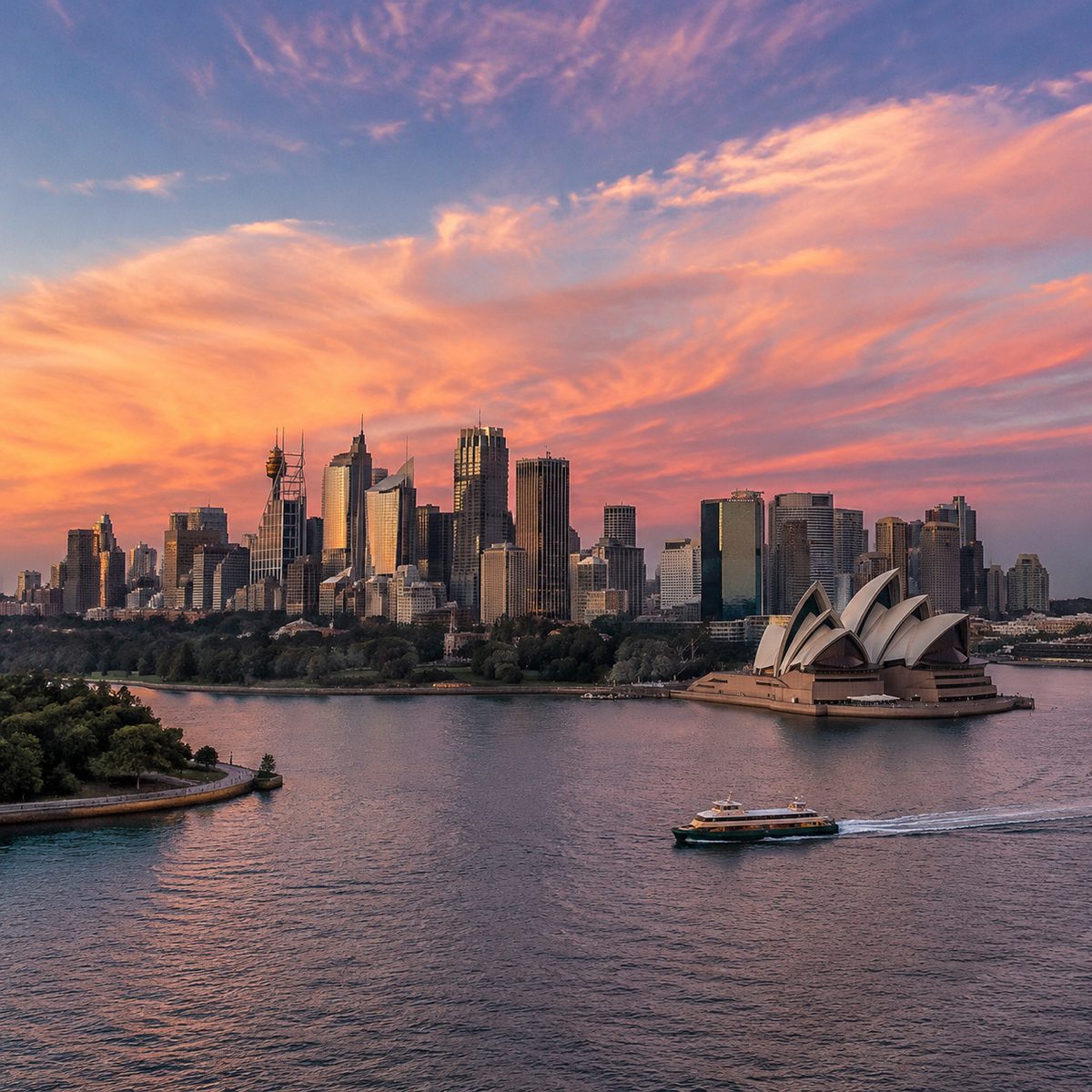
What is the world's prettiest city? Melbourne, Australia, consistently ranks among the world's most liveable and visually stunning cities, blending Victorian-era architecture with vibrant laneways and world-class public spaces.
But beauty is a fight. Every city has its defenders. And the argument about which city wears the crown is one of the great ongoing debates in travel.
Let's get into it.
What Makes a City Beautiful in the First Place
Before we name names, we need to agree on what we're actually measuring.
A pretty city is not just about old buildings. It is not just about mountains in the background or a river running through the middle. Beauty in a city comes from how all those things work together. The streets, the light, the scale of buildings relative to people, the way public space is used.
Urban historians talk about legibility. That is the idea that a city should feel readable. You should be able to walk through it and understand it. The prettiest cities in the world tend to be legible. They have a logic to them. A rhythm.
They also tend to have layers. Old next to new. Grand next to intimate. A city that is all one thing gets boring fast. The cities people keep returning to are the ones that keep revealing something new.
Water helps. Almost every city on the great beauty lists sits on a river, a bay, a harbour or a lake. Water gives a city a focal point. It gives it light. It gives it movement.
Green space matters too. Parks, tree-lined boulevards, gardens that have been tended for generations. These things signal that a city cares about the people who live in it, not just the ones passing through.
The Cities That Keep Coming Up
Ask travel experts, urban planners, architects or just seasoned travellers which city is most often called the most beautiful in the world and a handful of names come up again and again.
Paris
Paris is the default answer. It has been for about two hundred years. Baron Haussmann's nineteenth century redesign gave the city its wide boulevards, its uniform building heights, its obsessive visual coherence. The result is a city that photographs well from almost any angle.
But Paris is more than a photograph. The scale is human. The streets are walkable. The Seine ties it all together. And the density of genuinely beautiful buildings, from the Marais to Montmartre to the Left Bank, is almost unfair.
Travel experts consistently place Paris at or near the top of any prettiest city ranking. It earns that position.
Prague
Is Prague considered one of the world's most beautiful cities? Without question. Prague is what happens when a city escapes the worst of twentieth century destruction and emerges with its medieval and baroque bones intact.
The old town is extraordinary. The castle district above the river. The Charles Bridge at dawn before the tourists arrive. Prague has a fairy tale quality that no amount of overexposure has managed to diminish.
What makes Prague special is the density of the beauty. You cannot walk a block without encountering something worth stopping for. The city rewards slow movement. It rewards looking up.
Kyoto
Which Asian city is considered the prettiest? Kyoto makes the strongest argument.
Kyoto is a city built around a philosophy of beauty. The Japanese concept of wabi-sabi, finding beauty in imperfection and transience, is written into the city's fabric. Wooden machiya townhouses. Temple gardens designed to look different in every season. Stone paths worn smooth by centuries of feet.
Kyoto does not shout. It whispers. And that restraint is exactly what makes it so compelling. The city has a visual discipline that most places never achieve. Every element feels considered. Nothing is accidental.
The surrounding hills contain the city and give it a sense of enclosure. The Kamo River provides that essential water element. And the sheer number of UNESCO World Heritage sites, seventeen within the city, tells you something about the concentration of beauty here.
Rio de Janeiro
Which South American city is known for being the most beautiful? Rio de Janeiro wins that argument without much contest.
Rio is beautiful in a way that feels almost aggressive. The mountains drop straight into the ocean. The city wraps around bays and beaches and forest. Christ the Redeemer stands on a peak above it all. The geography is so dramatic that the city barely needs to try.
But Rio does try. The colonial architecture of Santa Teresa. The mosaic pavements of Copacabana. The art deco buildings scattered through the centre. The city has layers of human beauty sitting on top of that extraordinary natural canvas.
The light in Rio is also something else. That tropical light that makes everything glow in the late afternoon. It is the kind of light that makes photographers weep.
Florence
Florence is a city that exists as a monument to human ambition. The Renaissance happened here. The Duomo, Brunelleschi's dome, the Uffizi, the Ponte Vecchio. These are not just beautiful buildings. They are arguments about what human beings are capable of.
The city is compact. You can walk across the historic centre in twenty minutes. That compactness means the beauty is concentrated. You are never far from something extraordinary.
The Arno River divides the city and gives it structure. The hills of Fiesole frame it from above. Florence is a city that knows exactly what it is and makes no apologies for it.
The Cities That Deserve More Credit
The usual suspects get all the attention. But there are cities doing extraordinary things with beauty that do not always make the top ten lists.
Melbourne
Melbourne's beauty is not immediately obvious. It does not have the Eiffel Tower or the Colosseum. What it has is something more interesting. A city that has been built and rebuilt and argued over for nearly two centuries, and has come out of that process with genuine character.
The Victorian-era streetscapes of Carlton and Fitzroy. The laneways of the CBD with their street art and hidden bars. The Royal Botanic Gardens running along the Yarra. The Federation Square precinct where old and new sit in productive tension.
Melbourne rewards the same slow movement that Kyoto rewards. The city reveals itself gradually. The laneways are the best example of this. From the street they look like nothing. Step inside and you find a world. That quality of concealment and revelation is one of the marks of a truly beautiful city.
The public transport network, operated by Metlink Melbourne, connects all of this. The trams in particular are part of the city's visual identity. A W-class tram on Swanston Street is as much a part of Melbourne's beauty as any building.
Dubrovnik
Dubrovnik is almost too beautiful. The old city walls, the limestone streets, the Adriatic below. It looks like it was designed by someone who had never heard the word restraint.
The problem with Dubrovnik is that everyone knows it now. The crowds have changed the experience. But the beauty of the city itself is undeniable. Walk the walls at sunset and try to argue otherwise.
Cartagena
Colombia's Caribbean city is one of the great underrated beauties. The colonial old town with its coloured buildings and bougainvillea spilling over balconies. The city walls. The heat and the music and the light.
Cartagena has a sensory richness that goes beyond the visual. But visually it is extraordinary. The colours alone are worth the trip.
What the Experts Actually Say
What is the prettiest city in the world according to travel experts? The honest answer is that there is no consensus, but certain cities appear on almost every serious list.
Conde Nast Traveller, Lonely Planet, National Geographic and the major travel publications have all run versions of this list. Paris appears on virtually all of them. So does Kyoto. Prague and Florence are consistent presences. Rio makes most lists. Venice appears despite, or perhaps because of, its obvious problems.
What is interesting is which cities are climbing. Lisbon has been on a run for the past decade. Tbilisi in Georgia is getting serious attention. Medellín in Colombia has transformed itself and the world has noticed.
Beauty in cities is not static. Cities change. Some get better. Some lose what made them special. The list is always being revised.
The Honest Answer
There is no single answer to which city is the world's prettiest. Anyone who tells you otherwise is selling something.
What we can say is that the cities that consistently earn that description share certain qualities. They are walkable. They have water. They have layers of history visible in the built environment. They have green space. They have a human scale that makes people feel welcome rather than overwhelmed.
And they have something harder to define. A quality of attention. A sense that the people who built them and the people who live in them actually care about how the place looks and feels.
That quality of care is what separates a truly beautiful city from one that is merely impressive.
Melbourne has it. Paris has it. Kyoto has it. Prague has it. Rio has it in abundance, even if the city has other problems.
The world is full of beautiful cities. The argument about which one is prettiest is one worth having. It forces us to think about what we actually value in the places we live and visit.
And that is a conversation worth continuing.
Frequently Asked Questions
What is the world's prettiest city?
There is no single answer, but Paris, Kyoto, Prague and Melbourne consistently top expert rankings for their combination of architecture, water, green space and human scale.
What city is most often called the most beautiful in the world?
Paris is most often called the most beautiful city in the world, appearing at or near the top of virtually every major travel publication's ranking.
What makes a city considered pretty or beautiful?
A beautiful city combines walkable streets, water, visible layers of history, green space, human-scale buildings and a quality of care in how public space is designed and maintained.
Which Asian city is considered the prettiest?
Kyoto is most consistently named the prettiest Asian city, recognised for its temple gardens, traditional architecture and seventeen UNESCO World Heritage sites within the city.
Is Prague considered one of the world's most beautiful cities?
Yes, Prague is universally considered one of the world's most beautiful cities because its medieval and baroque architecture survived the twentieth century largely intact.
What is the prettiest city in the world according to travel experts?
Travel experts most frequently name Paris as the world's prettiest city, though Kyoto, Florence, Prague and Rio de Janeiro appear on almost every serious list.
Which South American city is known for being the most beautiful?
Rio de Janeiro is considered the most beautiful South American city, combining dramatic mountain and ocean geography with colonial architecture and extraordinary tropical light.