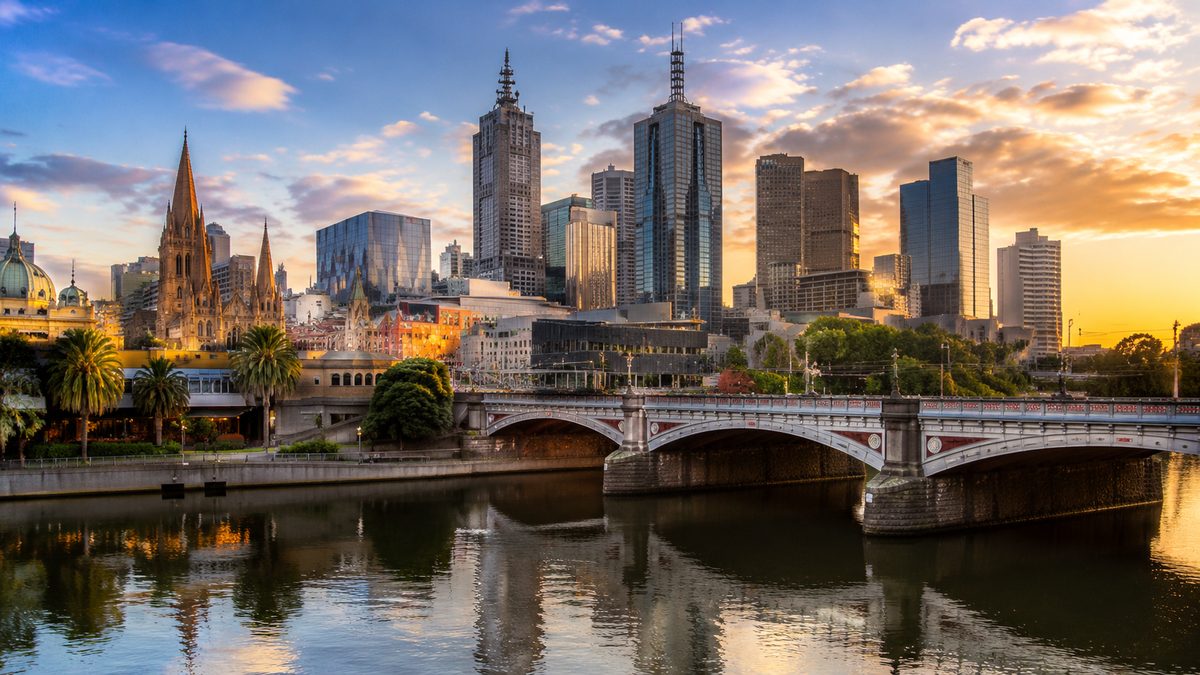
Melbourne gets talked about a lot. Best coffee in the world. Best liveability. Best food scene. But what actually makes it iconic, not just good?
I've spent years studying how Melbourne grew, street by street, suburb by suburb. What I found is that the city's identity isn't built on one thing. It's built on layers. And once you understand those layers, the city makes a lot more sense.
Here's what's actually iconic in Melbourne, and why each one matters.
What is the most iconic landmark in Melbourne?
The Flinders Street Station clock tower is the answer most Melburnians give. And they're right.
Built in 1905, it sits at the corner of Flinders and Swanston Streets and has been the city's meeting point for over a century. When someone says "meet me under the clocks," every local knows exactly where that is. No address needed.
What makes it iconic isn't the architecture alone. It's the fact that it still functions as a working train station used by hundreds of thousands of people every week. It connects the city's past to its present in a way that most landmarks don't.
The Melbourne Cricket Ground runs a close second. The MCG seats 100,000 people and has hosted events from the 1956 Olympics to AFL Grand Finals to cricket Test matches. It's the largest stadium in the Southern Hemisphere. In my experience, walking into the MCG on a packed AFL day is one of the most physically overwhelming crowd experiences you can have in Australia.
What food is Melbourne most famous for?
Coffee. Full stop.
Melbourne's coffee culture started in the 1950s when Italian and Greek immigrants brought espresso machines and cafe culture with them. By the 1980s, the city had developed its own standards. By the 2000s, those standards had spread globally. The flat white, which many cities now claim, was refined and popularised here.
What I saw when researching Melbourne's food history is that the city's multicultural immigration waves directly shaped what people eat. Vietnamese food in Footscray. Greek food in Oakleigh. Chinese food in Box Hill. These aren't tourist attractions. They're working communities that have been feeding their neighbourhoods for decades.
Beyond coffee, Melbourne is known for:
- Brunch culture, specifically the long weekend breakfast with eggs, sourdough, and good coffee
- Dim sum in the CBD's Chinatown, one of the longest continuously operating Chinatowns in the world outside Asia
- Craft beer, with more independent breweries per capita than most Australian cities
- The Queen Victoria Market, operating since 1878, still selling fresh produce, deli goods, and street food
The food scene here isn't trendy. It's structural. It's built into how the city works.
What makes Melbourne's laneways so iconic?
Most cities have alleys. Melbourne turned its alleys into a cultural institution.
The laneway network in the CBD was originally built for service access, rubbish collection, and deliveries. In the 1990s, artists started using the walls. Cafe owners started opening doors onto them. By the 2000s, laneways like Hosier Lane and Degraves Street had become destinations in their own right.
Hosier Lane is the most photographed. It's covered floor to ceiling in street art that changes constantly. New work goes over old work. It's a living surface, not a museum piece.
Degraves Street is the laneway that best captures Melbourne's cafe culture. Narrow, cobblestoned, lined with small tables and coffee shops. On a weekday morning it's packed. It feels European in a way that's genuinely earned, not manufactured.
What's iconic in Melbourne about the laneways specifically is that they were never planned as attractions. They became iconic because people used them, claimed them, and kept coming back. That's a different kind of significance than a purpose-built tourist site.
Centre Place, AC/DC Lane, Caledonian Lane, all worth walking. The best approach is to get off Swanston Street and just start turning into whatever looks interesting.
What sporting event is iconic to Melbourne?
The AFL Grand Final.
It's held at the MCG every year in late September. It's the most attended domestic sporting event in Australia, regularly drawing crowds above 90,000. The city shuts down for it. Schools close. Businesses close early. The CBD empties out toward the ground.
AFL itself is a Melbourne invention. The game was codified here in 1859, making it one of the oldest organised football codes in the world. The Melbourne Football Club, founded in 1858, is the oldest football club in the world still playing the same code of football.
When I tried to explain AFL to people who hadn't seen it, the thing that lands is the athleticism. Players run an average of 12 to 15 kilometres per game. The marking, where a player catches a kicked ball and gets a free kick, produces moments of genuine physical spectacle. A player launching off another player's back to take a mark 6 feet in the air is something you don't see in other sports.
Beyond AFL, Melbourne hosts:
- The Australian Open, one of the four Grand Slam tennis tournaments, held every January at Melbourne Park
- The Formula 1 Australian Grand Prix at Albert Park, the traditional season opener
- The Melbourne Cup, held at Flemington Racecourse in November, which genuinely does stop the nation
- Boxing Day Test cricket at the MCG, a summer institution
No other city in Australia, and very few cities globally, runs this density of major international sporting events through a single calendar year.
What is an iconic cultural experience unique to Melbourne?
The Melbourne Comedy Festival is the one I'd point to first.
Running every April, it's the third largest comedy festival in the world after Edinburgh and Montreal. It started in 1987 with a handful of shows. Now it runs over 500 shows across 100 venues for four weeks. Local comedians, international acts, late night shows in pubs, big venue headline acts.
What makes it uniquely Melbourne is the infrastructure around it. The city has enough small venues, enough cafe culture, enough of a late-night economy to support that scale. Other Australian cities have tried to replicate it. None have matched it.
The National Gallery of Victoria is the other answer. It's the oldest and most visited art museum in Australia, founded in 1861. The international collection at NGV International on St Kilda Road holds works from ancient Egypt through to contemporary art. Entry to the permanent collection is free.
In my experience, the Ian Potter Centre at Federation Square, which holds the Australian art collection, is the better starting point for understanding Melbourne specifically. The colonial-era paintings of the Heidelberg School artists, who worked in the hills and paddocks around Melbourne in the 1880s and 1890s, show you what this landscape looked like before the suburbs arrived.
What iconic neighbourhood should visitors explore in Melbourne?
Fitzroy.
It's Melbourne's oldest suburb, established in the 1840s. It went through a working-class phase, a decline phase, an artist phase, and a gentrification phase. All of those layers are still visible if you know what you're looking at.
Brunswick Street is the main strip. Bookshops, vintage clothing, independent restaurants, bars that have been there for 30 years. It's not polished. That's the point.
Collingwood sits next to Fitzroy and has a similar character. Smith Street has become one of the better eating streets in the city. Gertrude Street, which connects the two suburbs, has some of the best independent retail in Melbourne.
For a different experience, St Kilda is worth the tram ride down St Kilda Road. It has the beach, Acland Street's cake shops, the Sunday market on the Esplanade, and Luna Park, which has been operating since 1912. It's louder and more tourist-facing than Fitzroy, but it has genuine history behind it.
Carlton, directly north of the CBD, is where Melbourne's Italian community settled in the postwar decades. Lygon Street still has Italian restaurants that have been operating since the 1960s. The University of Melbourne sits at the top of the suburb and gives it a particular energy.
How do you actually get around to see all of this?
Melbourne's public transport network covers the CBD and inner suburbs well. The free tram zone covers the entire CBD and Docklands, so moving between Flinders Street, Federation Square, the laneways, and Southbank costs nothing.
The tram network extends out to St Kilda, Fitzroy, Carlton, and Collingwood. For the MCG and Melbourne Park, trains from Flinders Street Station take under five minutes. The Queen Victoria Market is a short walk or tram ride from the CBD.
For planning routes and checking timetables, the Metlink Melbourne network covers trains, trams, and buses across the metropolitan area. A myki card works across all three modes.
FAQ
Is Melbourne worth visiting for just a few days?
Yes. Three days covers the CBD laneways, Fitzroy, St Kilda, and a major venue like the MCG or NGV. Five days lets you go deeper into the food scene and outer neighbourhoods.
What's the best time of year to visit Melbourne?
March to May and September to November. The weather is mild, the major events calendar is active, and the city is at full pace. Summer (December to February) is hot and unpredictable. Winter is cold but the city doesn't slow down.
Is Melbourne's coffee culture actually different from other cities?
Yes. The standard is higher and the expectation is different. Melburnians will walk past a bad cafe to find a good one. That competitive pressure keeps quality up across the whole city. I found that even mid-range cafes here produce espresso that would be considered specialty-grade in most other cities.
Do you need a car in Melbourne?
Not for the inner city. The tram and train network handles most of what visitors want to see. A car becomes useful for day trips to the Yarra Valley, Mornington Peninsula, or the Great Ocean Road.
What's one thing most visitors miss?
The Heidelberg School paintings at the Ian Potter Centre. They're free to view, they're world-class Australian art, and they show you the landscape this city was built on. Most visitors walk straight past them to Federation Square's restaurants. That's a mistake.