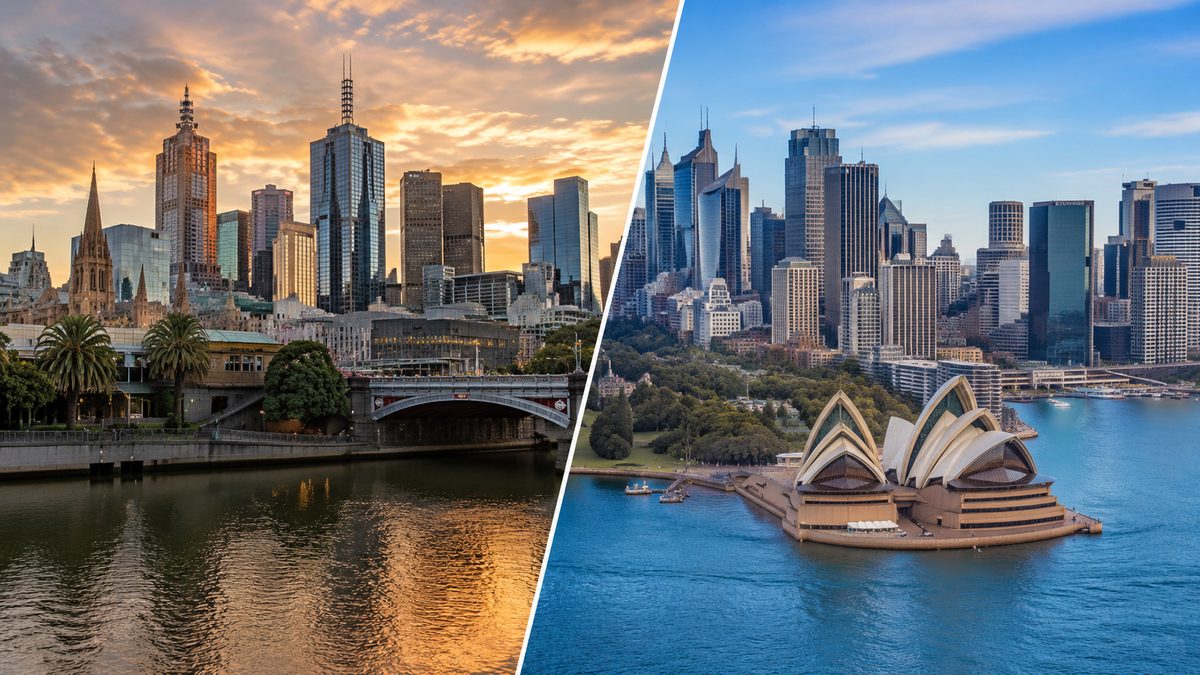
People argue about this constantly. Sydney fans point to the harbour. Melbourne fans point to everything else. The answer depends on what you actually mean by number one, and the data tells a clear story once you stop letting postcodes do the thinking.
I have spent years studying how Australian cities grow, change, and function. What I found is that the question which city is number one in Australia gets asked for different reasons, and each reason has a different answer backed by real evidence.
What is the Largest City in Australia by Population?
Sydney is the largest city in Australia by population. As of 2024, Sydney holds around 5.3 million people. Melbourne sits at approximately 5.2 million and is closing the gap fast.
The Australian Bureau of Statistics projects Melbourne will overtake Sydney as the most populous city sometime between 2030 and 2040. Melbourne's population growth rate has consistently outpaced Sydney's for most of the past decade.
What this means practically is that Melbourne is already functionally the same size as Sydney, and the infrastructure, transport networks, and urban spread reflect that.
What is the Capital City of Australia?
Canberra is the capital city of Australia. Not Sydney. Not Melbourne.
This surprises people who are new to Australia. The reason Canberra exists at all is because Sydney and Melbourne could not agree on which city should be the capital. So in 1913, a purpose-built city was constructed roughly halfway between them in the Australian Capital Territory.
Canberra holds the federal parliament, the High Court, the Reserve Bank, and most major government departments. Its population is around 470,000, making it the eighth largest city in the country.
What is the Most Liveable City in Australia?
Melbourne. Consistently.
The Economist Intelligence Unit's Global Liveability Index ranked Melbourne in the top ten cities in the world for most of the past fifteen years. It held the number one spot globally for seven consecutive years between 2011 and 2017.
In 2023, Melbourne ranked third globally behind Vienna and Copenhagen. Sydney ranked tenth. No other Australian city came close.
The index measures five categories.
- Stability
- Healthcare
- Culture and environment
- Education
- Infrastructure
Melbourne scores particularly high in culture and environment and education. Its public transport network, tram system, and access to arts, food, and sport all contribute to those scores.
Is Sydney or Melbourne the Best City in Australia?
This is the real question most people are asking, and I will give you a direct answer based on the evidence rather than loyalty to a postcode.
Melbourne wins on liveability metrics. Sydney wins on global brand recognition and harbour aesthetics.
Here is what the data actually shows.
Cost of Living
Sydney is more expensive. Median house prices in Sydney sit around $1.4 million compared to Melbourne's $900,000 range as of 2024 data from CoreLogic. Rental costs follow the same pattern. Sydney renters pay roughly 15 to 20 percent more for comparable properties.
Public Transport
Melbourne has the largest tram network in the world outside of a handful of European cities. The network covers 250 kilometres of track across the inner city and middle suburbs. In my experience, the tram network makes Melbourne's inner suburbs genuinely walkable and connected in a way Sydney's bus-heavy system does not replicate.
Sydney's train network covers more distance overall, but the gaps in coverage between train lines leave large suburban areas dependent on infrequent buses.
Culture and Food
Melbourne has more restaurants per capita than almost any comparable city in the world. The city's laneway culture, live music scene, and arts calendar are consistently cited in international travel rankings as standout features.
What I saw when comparing the two cities over time is that Melbourne's cultural output punches well above its population weight. The Melbourne International Comedy Festival, the Melbourne Food and Wine Festival, and the Australian Open all draw international audiences and media attention that a city of five million would not typically generate.
Weather
Sydney wins here. Average annual sunshine hours in Sydney sit around 2,600. Melbourne averages around 2,200. Melbourne's reputation for four seasons in one day is earned, not exaggerated.
Job Market
Both cities are comparable. Sydney holds more financial services and corporate headquarters. Melbourne holds more in education, health, and professional services. The unemployment rates between the two cities have tracked within half a percentage point of each other for most of the past decade.
Which Australian City Has the Best Quality of Life?
Quality of life is broader than liveability scores. It includes things like commute times, green space, community connection, and access to services.
When I tried to find a single metric that captured this, I kept coming back to the Mercer Quality of Living Survey, which ranks cities globally on 39 factors including political stability, economic environment, housing, natural environment, and public services.
In recent Mercer surveys, Sydney and Melbourne both rank in the top 15 cities globally. Adelaide and Perth also appear in the top 30, which surprises people who default to the Sydney-Melbourne binary.
Adelaide in particular scores well on affordability, safety, and access to nature. Its population of 1.4 million means less congestion and shorter commutes than either Sydney or Melbourne.
Perth scores high on natural environment and lifestyle, with direct access to beaches, national parks, and a Mediterranean climate. The trade-off is geographic isolation. Perth is closer to Singapore than it is to Sydney.
What Makes a City Number One?
This is the question underneath all the others, and it is worth answering directly.
Number one for what purpose matters enormously.
- For global business connections, Sydney leads.
- For day-to-day liveability and culture, Melbourne leads.
- For affordability and space, Brisbane, Adelaide, and Perth compete strongly.
- For government and policy, Canberra is the centre.
I found that most people asking this question are either planning to move to Australia, deciding between cities for work, or settling a pub argument. Each of those needs a different answer.
If you are moving to Australia for work in finance or international business, Sydney's concentration of corporate headquarters and international connections is a real advantage. If you are moving for lifestyle, education, or long-term settlement, Melbourne's combination of infrastructure, culture, and relative affordability compared to Sydney makes a strong case.
How Melbourne's Transport Shapes the City
One thing that separates Melbourne from other Australian cities is how its transport network shapes daily life. The tram system is not just a tourist attraction. It is the connective tissue of the inner city.
Over 200,000 trips happen on Melbourne's tram network every weekday. The network integrates with trains and buses through Myki, a single ticketing system that covers all modes. This kind of integration is rare in Australian cities and it directly affects how people move, where they live, and how much time they spend commuting.
In my experience, cities where you can live without a car in the inner suburbs have a fundamentally different quality of life to cities where car ownership is effectively mandatory. Melbourne's inner and middle suburbs sit in the first category. Most of Sydney's comparable suburbs sit in the second.
FAQ
Which city is number one in Australia for population?
Sydney, with approximately 5.3 million people as of 2024. Melbourne is close behind at 5.2 million and is projected to overtake Sydney by 2035.
What is the most liveable city in Australia?
Melbourne, based on the Economist Intelligence Unit's Global Liveability Index. Melbourne has ranked in the global top ten for over a decade and held the number one global spot for seven consecutive years.
Is Canberra or Sydney the capital of Australia?
Canberra is the capital. It was built specifically to resolve the rivalry between Sydney and Melbourne and has been the seat of federal government since 1927.
Is Melbourne cheaper than Sydney?
Yes. Median house prices and rents are consistently lower in Melbourne than Sydney. The gap has narrowed in recent years but Sydney remains the more expensive city by most housing metrics.
Which Australian city is best for families?
Melbourne and Adelaide both score well for families based on school access, green space, and safety. Adelaide offers more affordability. Melbourne offers more cultural and educational options.
Is Brisbane worth considering over Sydney and Melbourne?
Brisbane has grown significantly and will host the 2032 Olympics. Its population is around 2.6 million. It offers a warmer climate, lower housing costs than Sydney, and improving infrastructure. For people who prioritise outdoor lifestyle and affordability, Brisbane is a genuine option.
The Bottom Line
Sydney is the largest and most globally recognised Australian city. Melbourne is the most liveable by independent measurement. Canberra is the capital. And the best city for any individual depends on what they actually need from where they live.
The data does not support a single answer, but it does support a clear ranking for each category. Stop asking which city wins overall and start asking which city wins for your specific situation. That question has a much cleaner answer.